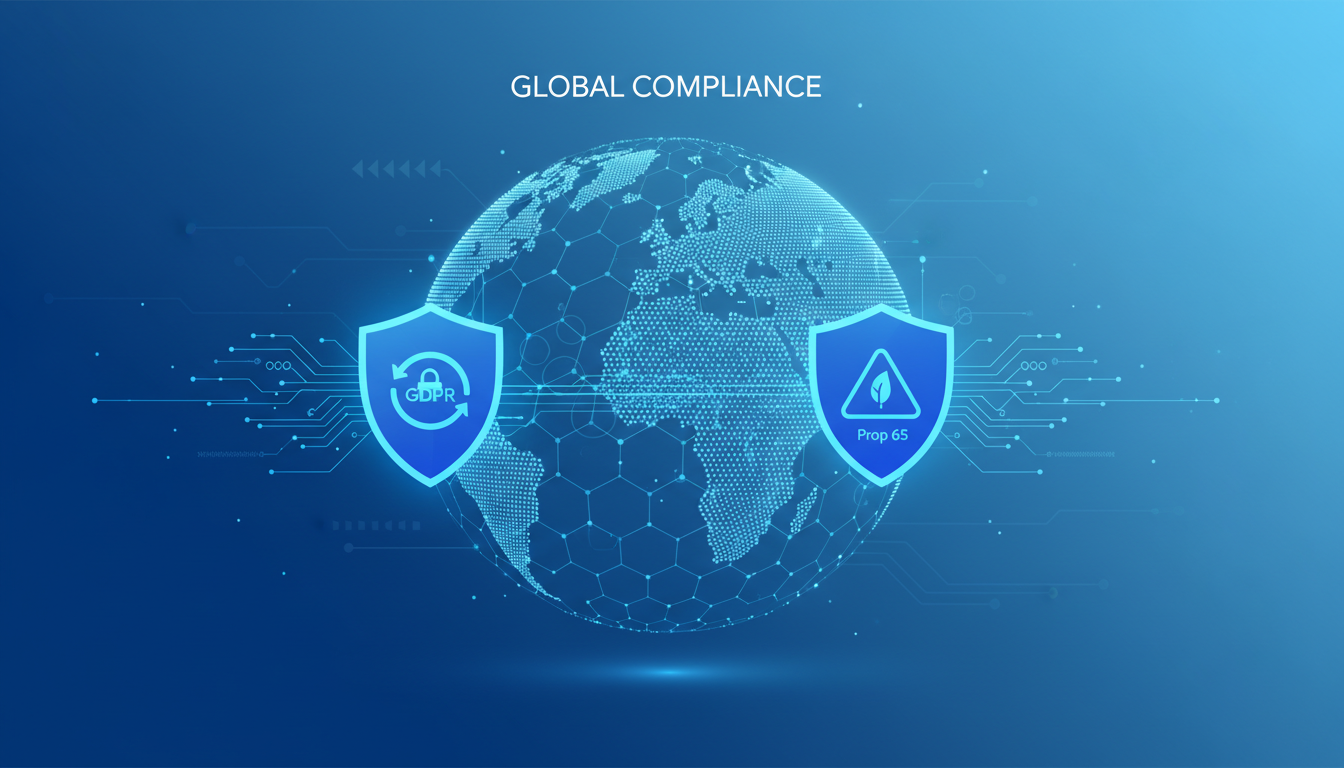
The Liability Shift: Why MoR Matters for AI
In the rapidly evolving landscape of agentic commerce, where AI models like Gemini are increasingly tasked with executing transactions on behalf of human users, the legal burden of compliance has shifted from a static web form to a dynamic, multi-layered ecosystem. For Compliance Officers, the primary challenge is no longer just securing a website; it is ensuring that an autonomous agent can navigate the labyrinth of global trade laws, tax jurisdictions, and regional consumer protection mandates. This is where the Merchant of Record (MoR) model, integrated within the Universal Commerce Protocol (UCP), becomes indispensable.
Merchant of Record Compliance signifies a structural shift in liability. When a brand adopts the UCP architecture, the protocol acts as a sophisticated buffer. In traditional e-commerce, the merchant is responsible for every nuance of the transaction—from calculating VAT in the European Union to displaying California Prop 65 warnings. In the MoR model, the protocol layer takes on the legal identity of the seller. This means the MoR is responsible for tax collection, remittance, and ensuring that the transaction adheres to local laws. For AI-driven commerce, this abstraction is vital because it allows the agent to focus on the intent of the purchase while the UCP infrastructure handles the legality of the execution.
Integrating with Google Pay and Google Merchant Center
By leveraging Google Pay as the primary payment facilitator within the UCP, brands can utilize a trusted, PCI-compliant environment that already manages sensitive financial data. However, the compliance requirements extend far beyond the payment itself. By syncing with Google Merchant Center (GMC), the UCP ensures that product data—including regional restrictions and safety warnings—is accurately reflected in the agent’s decision-making matrix. When Gemini processes a request to purchase a chemical product in California, the UCP identifies the regional requirement via the GMC feed and triggers the necessary Prop 65 disclosure before the transaction is finalized.
Navigating GDPR in Autonomous Transactions
The General Data Protection Regulation (GDPR) remains the gold standard for data privacy, and its application to agentic commerce presents unique challenges. In a world where the Model Context Protocol (MCP) allows AI models to access personal context to make better purchasing decisions, the definition of a ‘Data Controller’ becomes complex. Under the UCP framework, the MoR serves as the primary data controller for the transactional lifecycle, ensuring that PII (Personally Identifiable Information) is handled according to strict European standards.
Privacy by Design and the MCP Framework
The Universal Commerce Protocol utilizes the Model Context Protocol (MCP) to manage the flow of data between the user’s AI assistant and the commerce engine. This ensures ‘Privacy by Design’ by implementing the following safeguards:
- Identity Linking without Data Exposure: UCP uses secure identity linking to associate a Google account with a transaction without exposing the user’s full profile to every vendor in the supply chain.
- Minimization of Data Persistence: Transactional data is stored only as long as necessary for the MoR to fulfill its audit and tax obligations, fulfilling the GDPR’s ‘right to be forgotten.’
- Consent Management in Gemini: Before an agent executes a purchase, the UCP triggers a consent signal through the Google AI interface, ensuring that the user has explicitly authorized the MoR to process their data for that specific transaction.
For compliance officers, this automation reduces the surface area of risk. Instead of auditing hundreds of individual vendor integrations, they only need to audit the UCP implementation, which centralizes the logic for GDPR-compliant data processing.
Automating Regional Disclosures for Global Trade
One of the most granular challenges in global commerce is complying with regional labeling and disclosure laws, such as California’s Proposition 65. Prop 65 requires businesses to provide warnings to Californians about significant exposures to chemicals that cause cancer, birth defects, or other reproductive harm. Failure to comply can result in massive fines and litigation.
The Role of Supplemental Feeds and Risk Signals
The UCP solves the Prop 65 dilemma by integrating directly with Google Merchant Center Supplemental Feeds. When a product is flagged with a specific attribute in GMC, the UCP’s risk engine recognizes the shipping destination of the user (e.g., California) and automatically injects the required legal text into the agentic workflow. This occurs in both Native and Embedded checkout paths:
| Feature | Native Checkout (UCP) | Embedded Checkout |
|---|---|---|
| Disclosure Method | Automated via MCP Context | Redirect to Merchant Page |
| Liability Ownership | Merchant of Record (UCP) | Brand/Merchant |
| User Friction | Zero (Seamless AI interaction) | High (Manual interaction) |
| Compliance Accuracy | Real-time Feed Verification | Static Website Logic |
Tax Liabilities and Global Remittance
Beyond consumer protection warnings, the MoR model handles the complexities of international tax. Whether it is GST in India, VAT in the UK, or sales tax in various US states, the UCP calculates these liabilities at the point of sale. Because the UCP acts as the MoR, the brand does not need to register for tax in every jurisdiction. The protocol aggregates these transactions, files the necessary returns, and remits the taxes, allowing the brand to scale into new markets with virtually zero administrative overhead.
The Future of Agentic Compliance with Gemini
As we move toward a future where ‘Agentic Commerce’ is the norm, the role of compliance will transition from a reactive function to a proactive, algorithmic one. Using Gemini to analyze real-time regulatory changes, the UCP can update its compliance logic across the entire network simultaneously. If a new chemical is added to the Prop 65 list, the update to the Google Merchant Center feed can automatically update the purchasing logic for every AI agent using the protocol.
Conclusion: Scaling Safely
For the modern Compliance Officer, the Universal Commerce Protocol represents a paradigm shift. By offloading the burden of Merchant of Record Compliance to a standardized, Google-integrated architecture, organizations can embrace the power of AI and autonomous agents without the fear of global regulatory backlash. Whether it is the rigors of GDPR or the specificities of Prop 65, the UCP provides a legal and technical framework that ensures every transaction is not only efficient but also entirely compliant with the laws of the land.
Frequently Asked Questions
What is the Universal Commerce Protocol (UCP)?
The Universal Commerce Protocol (UCP) is an open standard developed to enable AI agents to autonomously conduct commerce transactions across any platform.
How does UCP enable agentic commerce?
UCP provides standardized APIs and protocols so AI agents can discover products, negotiate terms, and complete purchases without human intervention, working across any compatible commerce platform.
Why should businesses implement UCP?
UCP adoption reduces integration costs, opens revenue channels to AI-driven buyers, and future-proofs commerce infrastructure as agentic purchasing becomes mainstream.
Leave a Reply