Tag: Agentic Commerce
-
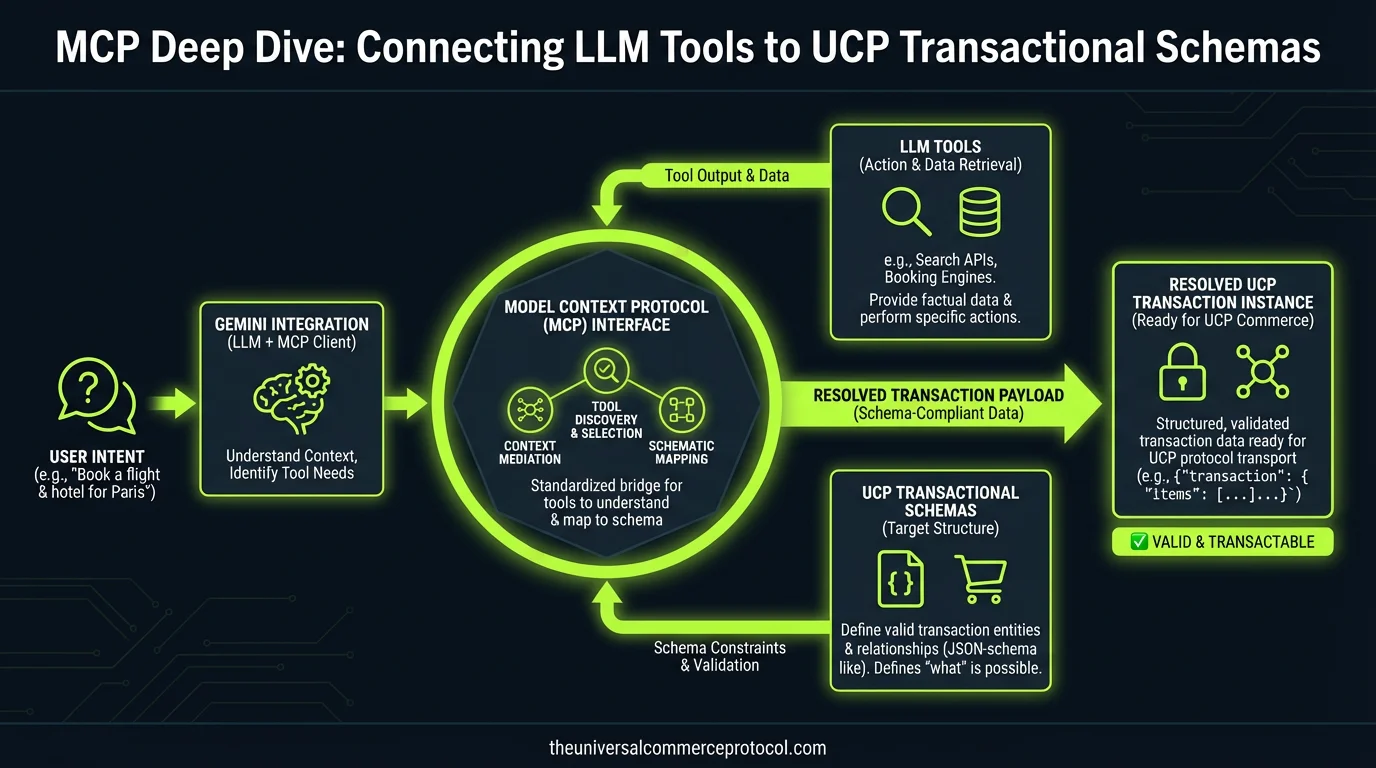
MCP Deep Dive: Connecting LLM Tools to UCP Schemas
Model Context Protocol (MCP) enables integration between Large Language Models—including Google Gemini, OpenAI GPT, and Claude—and Unified Commerce Platform (UCP) transactional systems by standardizing tool connections through schema-compliant APIs. This technical approach leverages MCP’s standardized transport layer to map LLM function calls to UCP transaction handlers, database schemas, and RESTful endpoints. Implementation requires defining JSON…
-

Google’s UCP vs. Facebook Commerce API: A Developer’s Comparison
Google UCP vs Facebook Commerce API: A developer’s comparison. Explore key differences, features, and choose the best API for your e-commerce needs.
-

AI Commerce Infrastructure: Where CFOs Invest Now
Following OpenAI’s 2024 discontinuation of native checkout capabilities, the commerce technology sector reallocated approximately $47 billion toward decentralized payment protocols and platform-agnostic infrastructure, with Stripe, Shopify, Square, and ISO 20022-compliant open standards capturing significant market share. CFOs should prioritize API-first payment systems, composable commerce architectures meeting PCI DSS Level 1 certification requirements, and merchant-agnostic transaction…
-

UCP Webhook Security & Event Reliability Checklist
Universal Commerce Platform (UCP) webhook implementations require HMAC-SHA256 signature verification compliant with RFC 2104, idempotent event processing using unique message identifiers, and exponential backoff retry logic with dead-letter queues to meet PCI DSS 3.4.1 requirements. TLS 1.2+ encryption, X-UCP-Signature header validation, cryptographic audit logging, and endpoint health monitoring achieve 99.9% reliability for order management, payment…
-

Agent State Recovery: Commerce AI & Reinforcement Learning
Amazon, Shopify, and eBay implement Markov Decision Processes (MDPs) with Q-learning, temporal difference learning, and policy gradient methods to optimize state recovery in distributed e-commerce systems during partial infrastructure failures. These reinforcement learning frameworks use reward functions that quantify downtime costs, data consistency violations, and customer churn, enabling value iteration algorithms to minimize cumulative operational…
-

Commerce Agent Performance: Data Science Testing
Commerce agent performance frameworks evaluate NLP-driven conversational AI systems using precision metrics including conversion rate optimization (CRO), cart abandonment rates, and session-level accuracy across unified commerce platforms spanning e-commerce, omnichannel retail, and mobile commerce channels. Data science testing methodologies quantify recommendation engine performance via click-through rates (CTR) and revenue per session (RPS) metrics, while validating…
-
Apple Pay & Digital Wallet Integration with UCP
Apple Inc.’s Apple Pay, which operates through iOS Secure Element tokenization, lacks full Universal Commerce Protocol (UCP) compatibility due to proprietary wallet architecture restrictions that prevent direct merchant API access to payment credentials. Payment processors including Stripe, Square, and PayPal have achieved partial UCP integration, but Apple’s closed ecosystem creates interoperability gaps for agentic commerce…
-

Agentic Commerce in India: Market Entry & Compliance
India’s fast-growing e-commerce market requires agentic commerce players to navigate RBI, DPDP, and FDI rules. A practical UCP-aligned market entry and compliance guide.
-
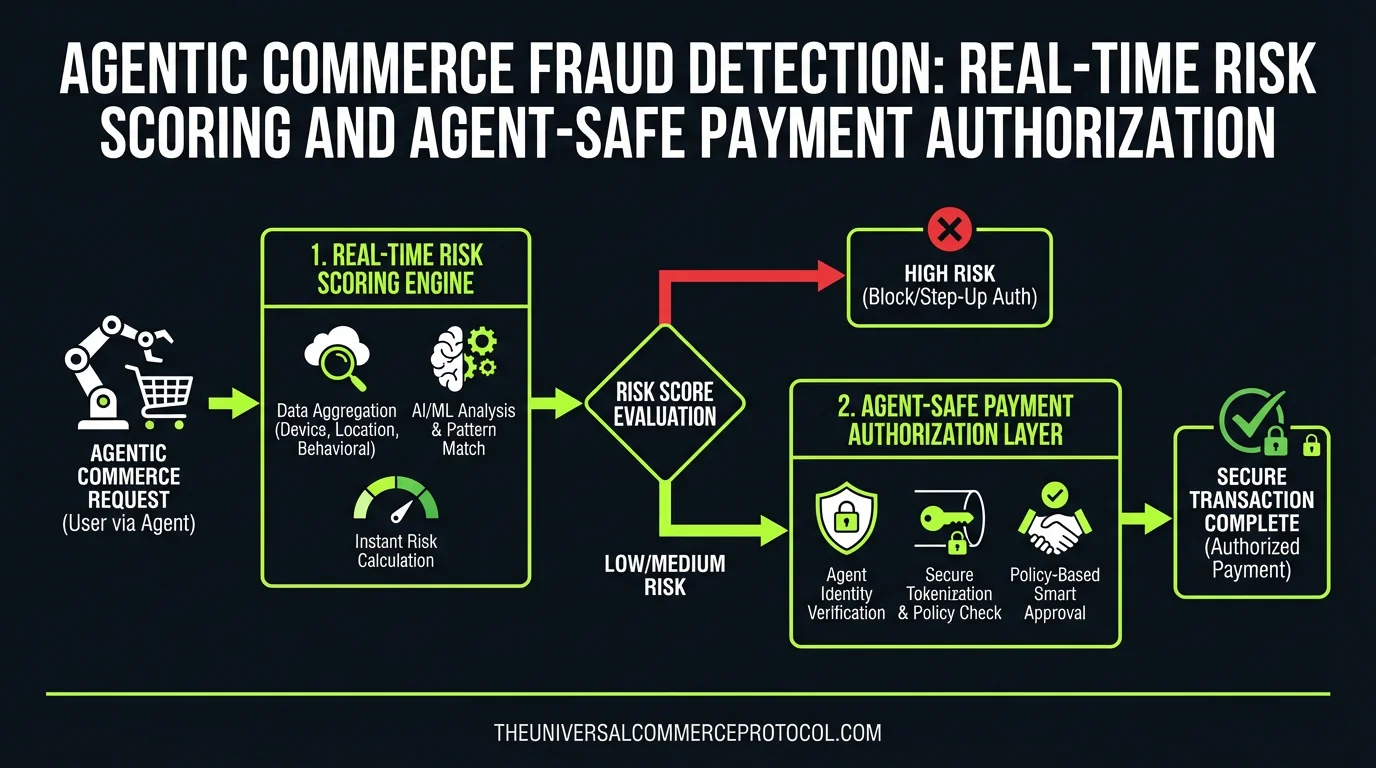
Agentic Commerce Fraud Detection: Real-Time Risk Scoring and Agent-Safe Payment Authorization
How merchants prevent AI agents from authorizing fraudulent transactions. Real-time fraud scoring patterns for autonomous commerce systems.
-
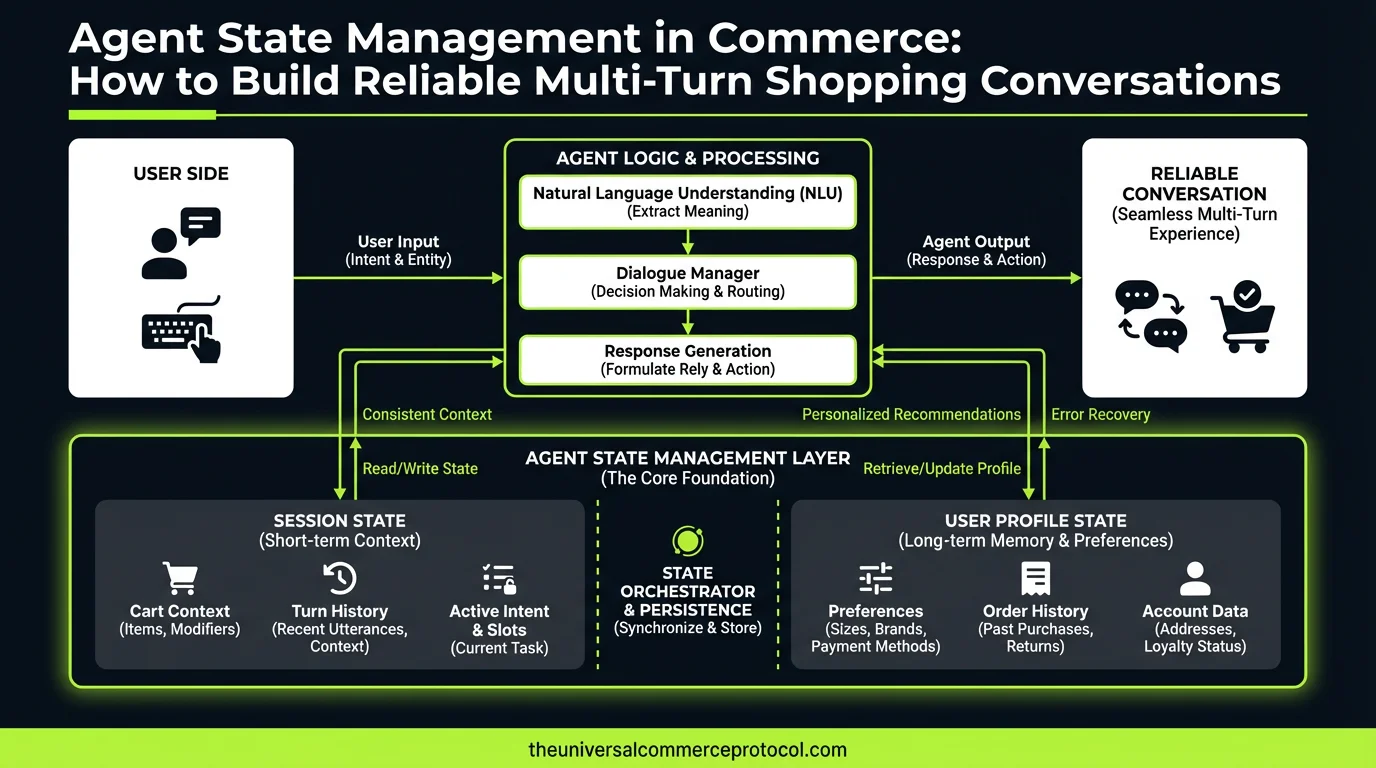
Agent State Management in Multi-Turn Commerce
Agent state management in e-commerce systems persists user intent, shopping cart contents, and transaction history across multi-turn conversations using vector databases such as Pinecone and Weaviate, combined with distributed session stores including Redis and Memcached. Agentic commerce platforms on Shopify, Magento, and custom microservices architectures implement deterministic finite state machines (DFSMs) with ACID-compliant transaction handling…