Tag: UCP
-

Mastercard and Google Launch Agentic Commerce Standard
Mastercard International Incorporated and Google LLC jointly launched Verifiable Intent, an open technical standard enabling cryptographically verified autonomous AI agent transactions with merchant payment systems under ISO/IEC 27001 compliance frameworks. The standard defines interoperable authentication protocols across Mastercard’s payment network, merchant acquirer banks, and issuing financial institutions to secure agent-to-merchant interactions. This initiative establishes standardized…
-

Cross-Border Payment Settlement in Agentic Commerce
Agentic commerce platforms settle cross-border payments via Stripe Connect, PayPal Cross-Border API, and Mastercard Send, with real-time FX conversion across 180+ currency corridors using OANDA and XE APIs, while maintaining PCI DSS Level 1, OFAC sanctions screening, and FinCEN AML/KYC compliance. Settlement infrastructure routes transactions through SWIFT, ACH, correspondent banking, and blockchain rails—including USDC on…
-

Training and Evaluating Commerce Agents: An Observability Framework for Model Performance
How to structure training data, evaluate agent decision-making, and monitor model performance in production commerce AI systems.
-
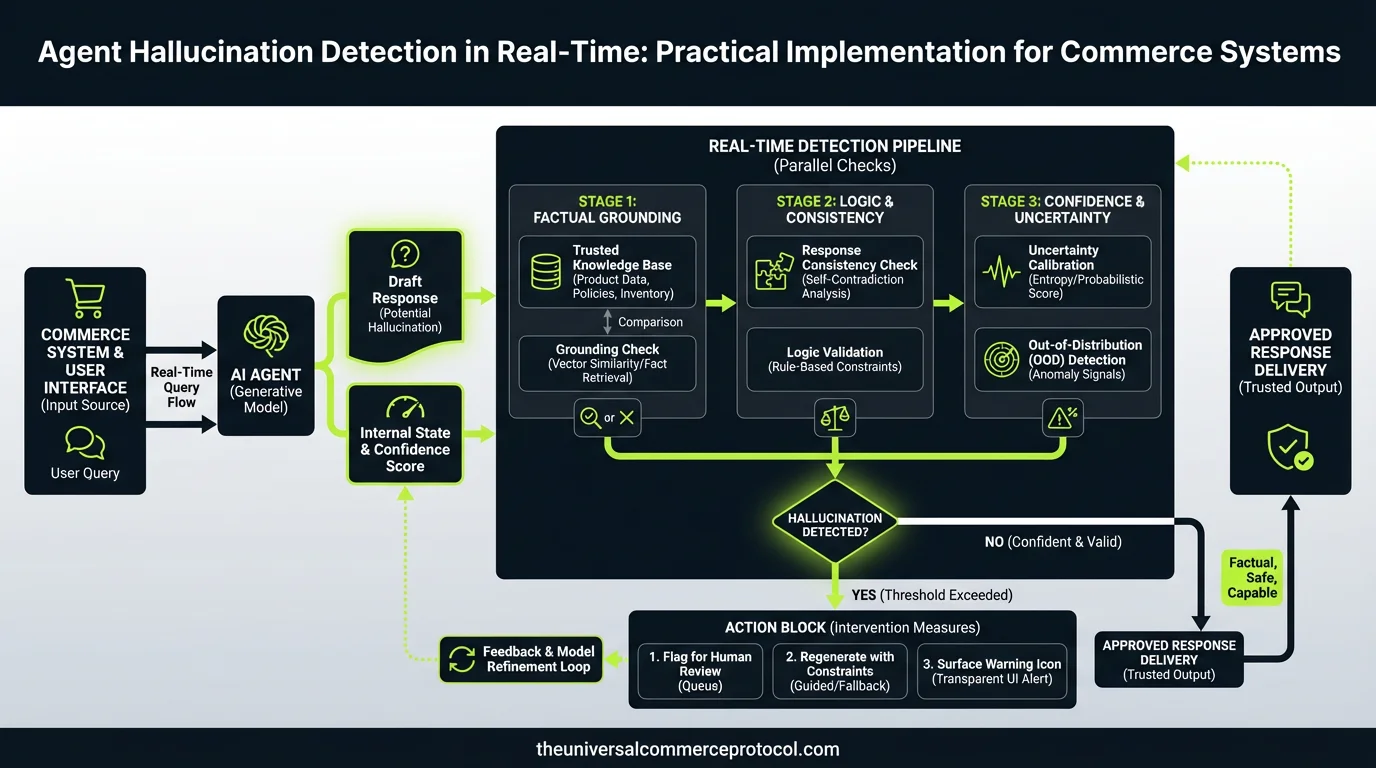
Real-Time Agent Hallucination Detection in Commerce
Real-time hallucination detection in e-commerce leverages Large Language Model (LLM) monitoring with Retrieval-Augmented Generation (RAG) verification, semantic consistency validation, and prompt engineering techniques to identify fabricated product claims across Shopify, WooCommerce, and REST APIs before publication. This detection framework mitigates Federal Trade Commission (FTC) violations, reduces chargeback disputes, and preserves data integrity across Product Information…
-
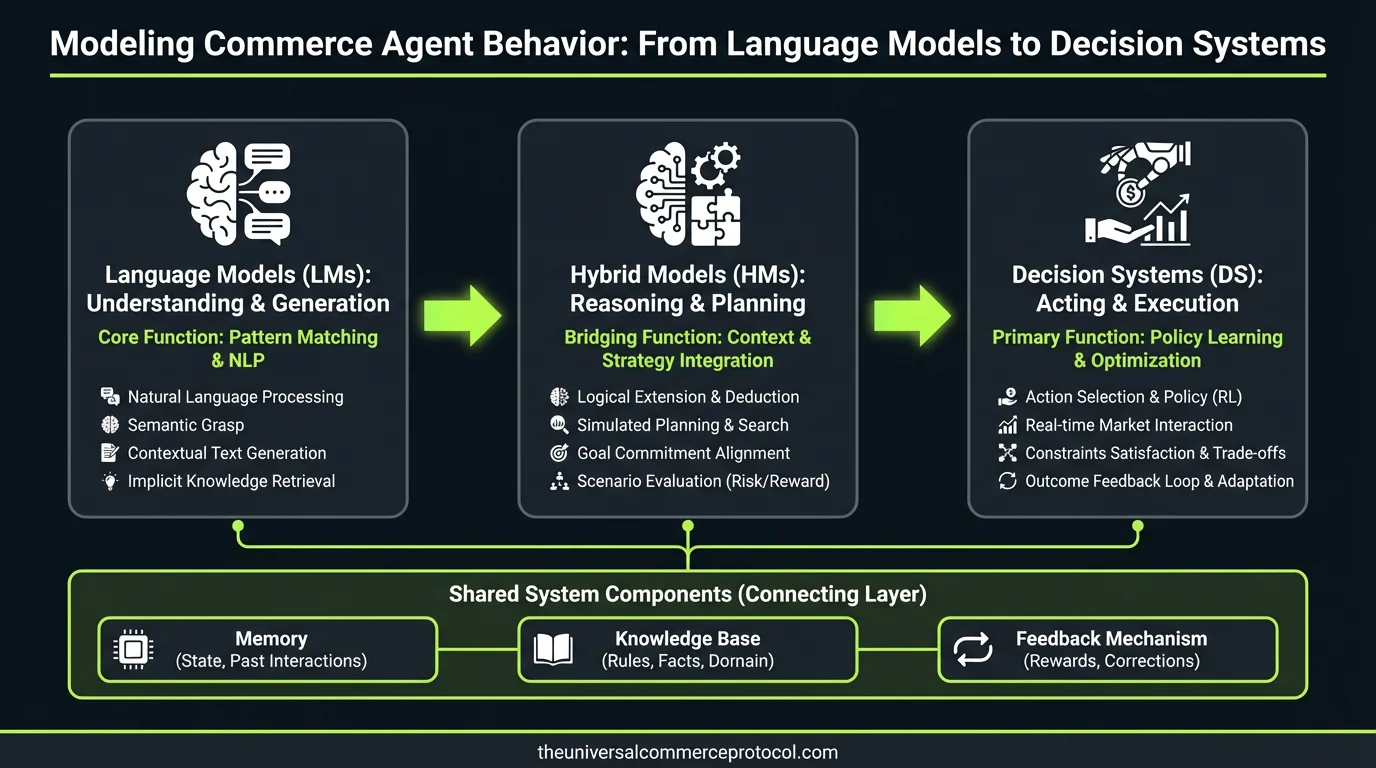
Commerce Agents: Language Models Making Purchase Decisions
Commerce agents leverage reinforcement learning with large language models (LLMs) such as GPT-4 and Claude to execute multi-objective optimization across e-commerce environments, balancing measurable KPIs including conversion rate, customer lifetime value, and inventory turnover while operating within constrained action spaces defined by platform APIs and business rules. These decision systems process real-time market signals, competitor…
-
Feature Engineering for Agent Cost Attribution: Building Predictive Models for Commerce AI ROI
How to engineer features, train models, and evaluate agentic commerce systems where cost per transaction varies by 40x based on interaction complexity.
-
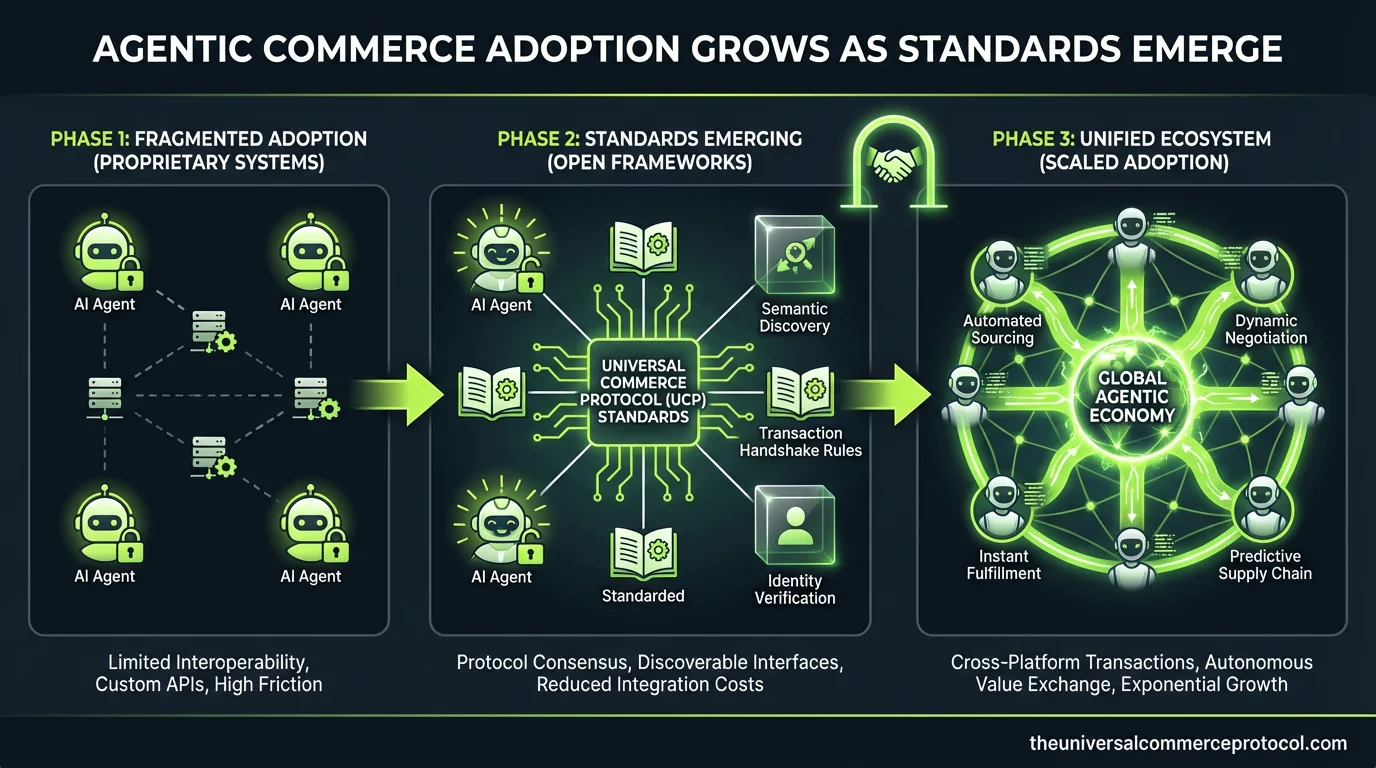
Agentic Commerce Adoption Grows as Standards Emerge
Agentic commerce—autonomous AI agents executing transactions via APIs without human intervention—is accelerating adoption across enterprise platforms including Shopify, Amazon Business, and Microsoft Dynamics 365 Commerce, with standards emerging from the Open Connectivity Foundation (OCF) and World Wide Web Consortium (W3C) through OpenAPI 3.1 and JSON-LD protocols. According to 2024 Gartner and Forrester research, agentic deployments…
-

Feature Contamination in Commerce AI: A Data Science Framework for Agent Robustness
Data poisoning attacks exploit feature space vulnerabilities in commerce agents, requiring novel detection methods beyond traditional validation.
-

Agent Commerce Returns: How AI Systems Handle Refunds, Exchanges, and Customer Dissatisfaction
AI agents autonomously process returns and handle customer dissatisfaction. Here’s how merchants manage refund logic, exchange workflows, and dispute resolution at scale.
-

The HOA Is a Commerce Network Waiting to Happen
The HOA thinks it’s an administrative body. It’s actually a legally constituted collective of households with shared infrastructure, shared costs, and shared interests. That’s not an HOA problem. That’s a UCP opportunity.