Tag: UCP
-
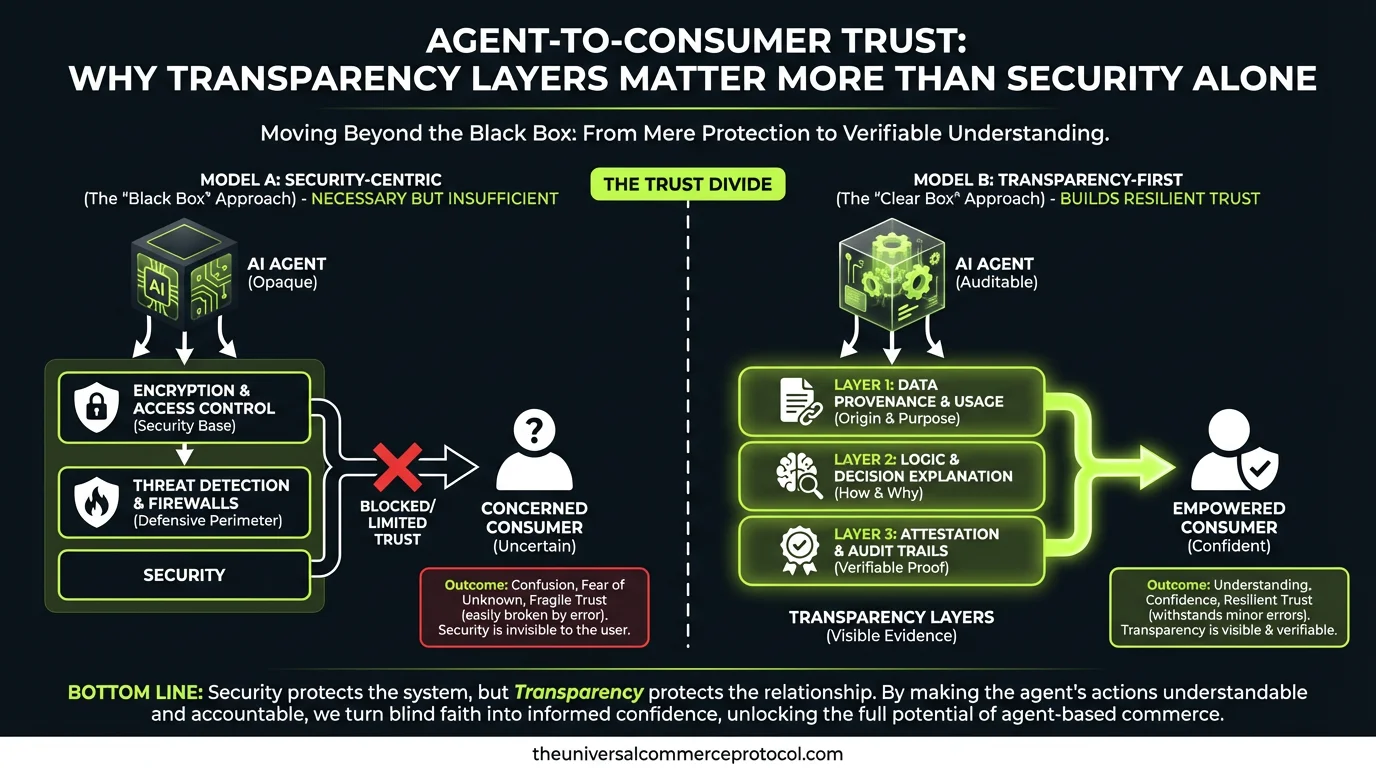
Agent-to-Consumer Trust: Transparency Over Security
Agentic commerce systems must implement GDPR Article 22-compliant transparency mechanisms—including decision logs, reasoning chains, and real-time action notifications—to address the 70% cart abandonment increase when consumers cannot understand agent-generated recommendations. Explainability layers documenting AI agent processing of personal data, dynamic pricing calculations, and inventory selection comply with the EU’s General Data Protection Regulation (GDPR), California…
-
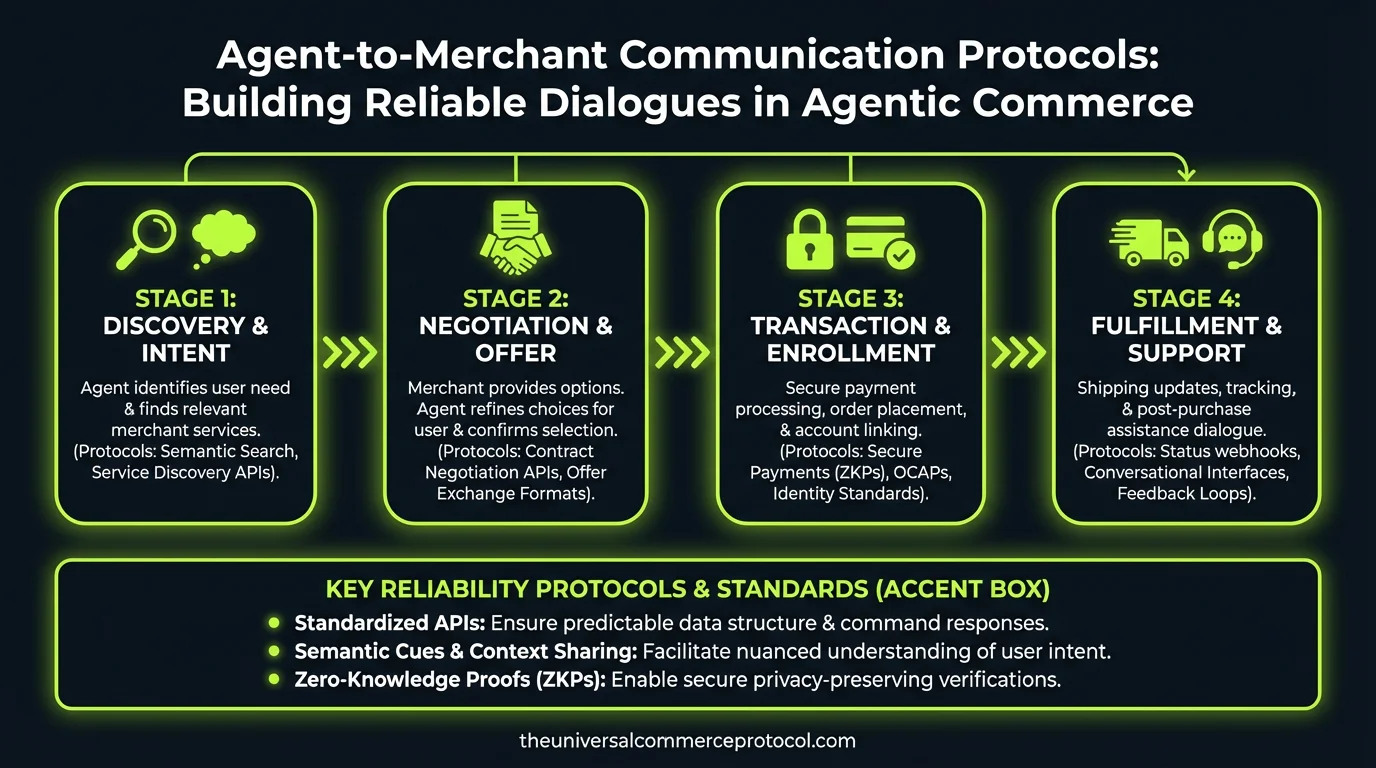
Agent-Merchant Communication: Reliable Protocols
Agent-merchant communication protocols in agentic commerce leverage OAuth 2.0 (RFC 6749), JSON-RPC 2.0, and REST APIs (RFC 7231) to achieve PCI DSS Level 1 compliance and interoperability across distributed payment networks. Idempotent request handling and atomic transaction semantics—governed by ACID properties and two-phase commit protocols—reduce transaction failure rates by 40-60%, while webhook event streams, message…
-
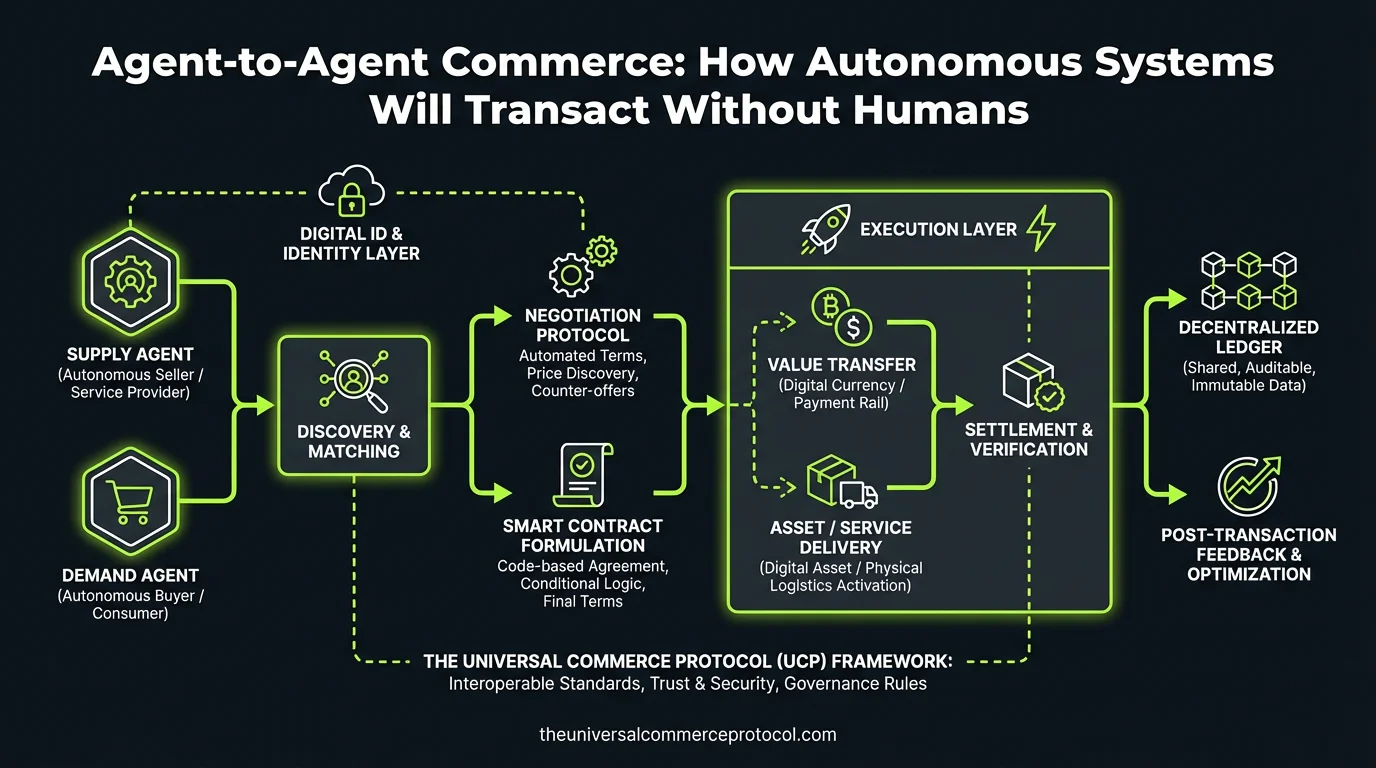
Agent-to-Agent Commerce: Autonomous Systems Transacting
Agent-to-agent commerce leverages smart contracts on blockchain platforms including Ethereum, Hyperledger Fabric, and IOTA to enable autonomous transactions between software agents, with settlement orchestrated through machine learning algorithms and predefined protocols. These distributed ledger technology (DLT) systems execute contract formation, negotiation, and real-time settlement for B2B transactions and IoT micropayments through AI-driven APIs without human…
-
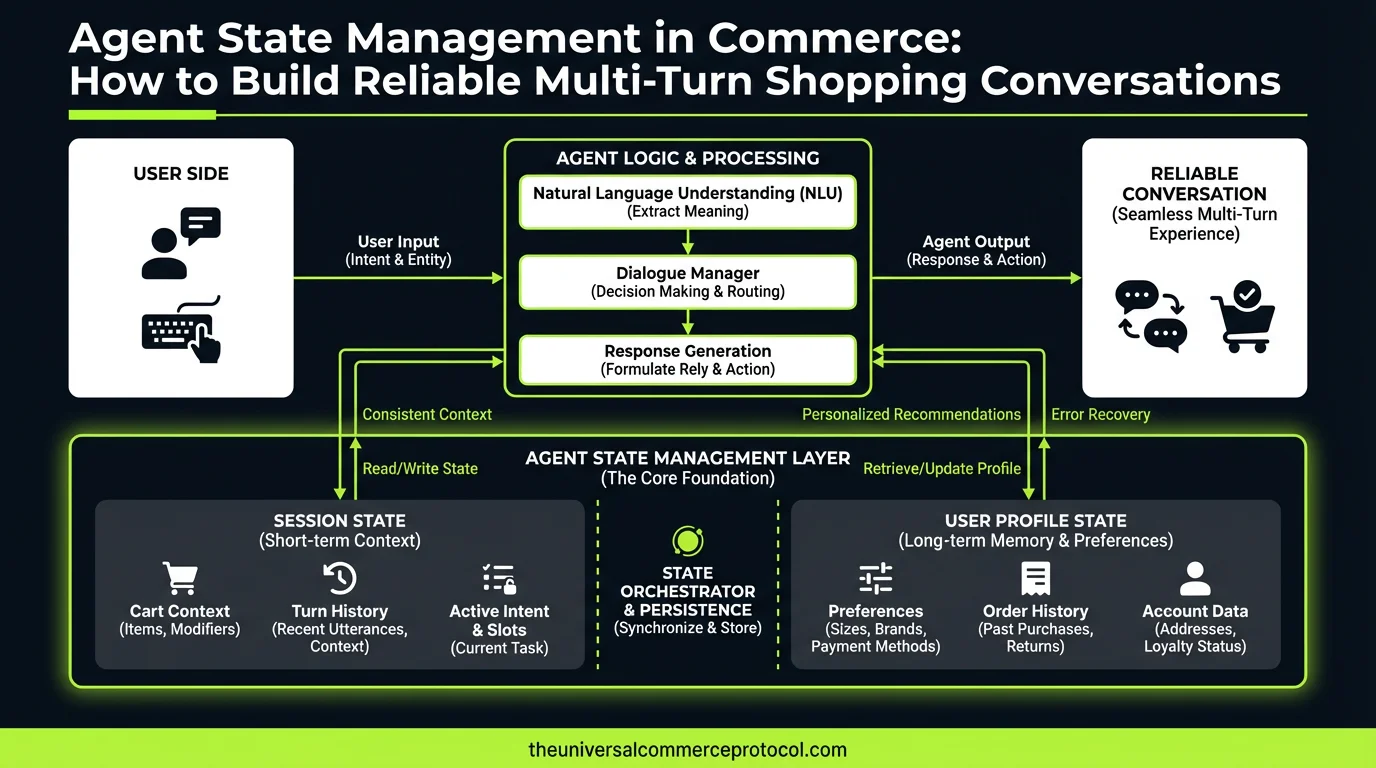
Agent State Management in Multi-Turn Commerce
Agent state management in e-commerce systems persists user intent, shopping cart contents, and transaction history across multi-turn conversations using vector databases such as Pinecone and Weaviate, combined with distributed session stores including Redis and Memcached. Agentic commerce platforms on Shopify, Magento, and custom microservices architectures implement deterministic finite state machines (DFSMs) with ACID-compliant transaction handling…
-
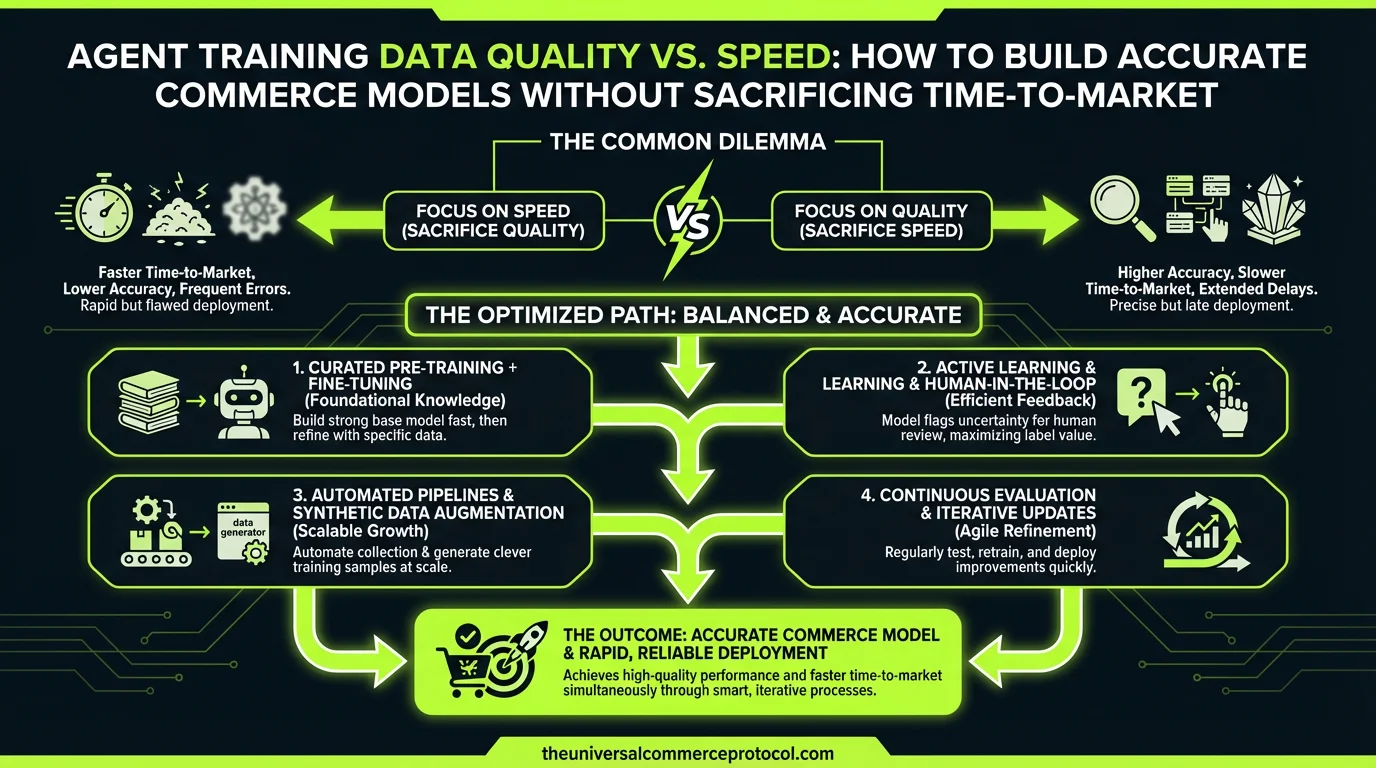
Training Data Quality vs. Speed in Commerce AI
Enterprise commerce AI agents deployed on Shopify, SAP Commerce Cloud, and Adobe Commerce require ≥95% training data accuracy across product information management (PIM), warehouse management systems (WMS), and ERP transaction logs to minimize fulfillment errors and chargebacks. Walmart, Target, and Amazon have demonstrated that retrieval-augmented generation (RAG), federated learning, and automated data validation frameworks reduce…
-
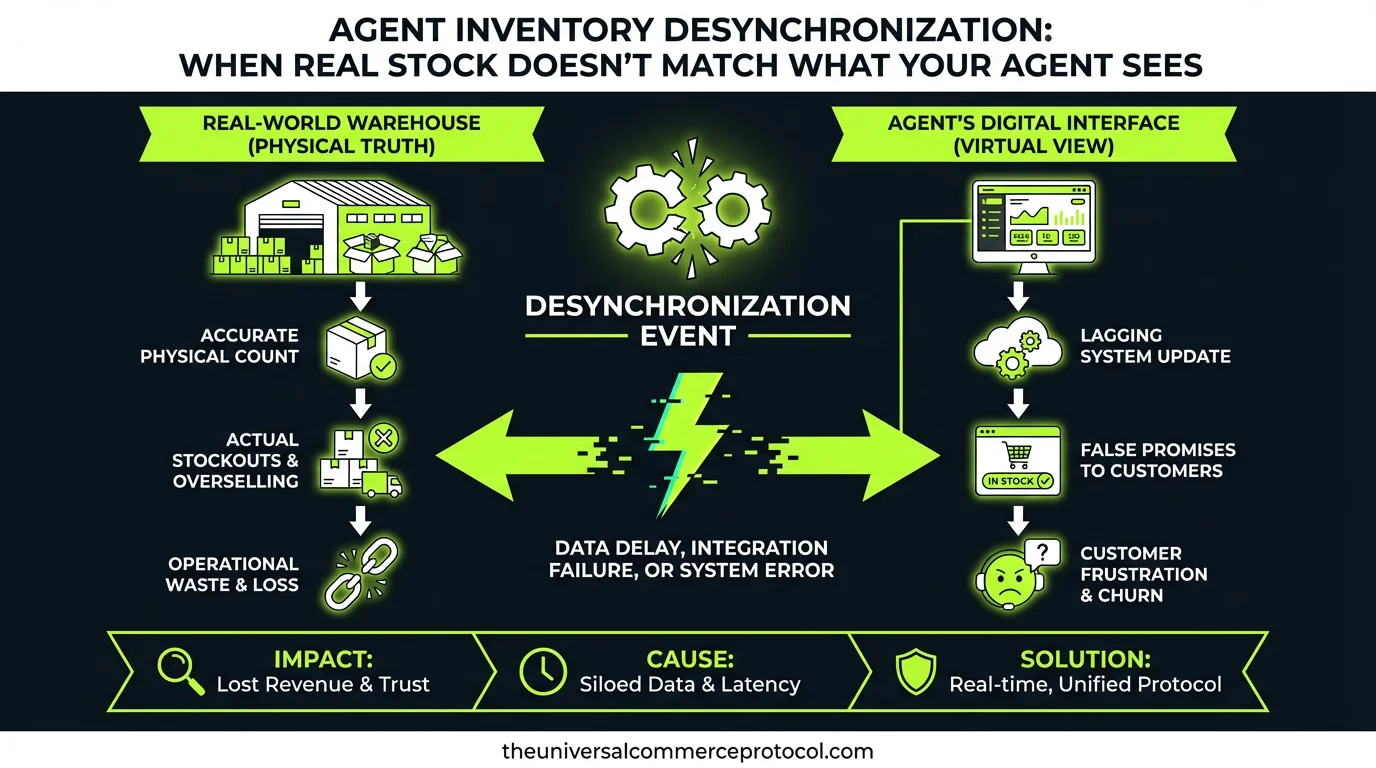
Agent Inventory Desynchronization: Prevent Stock Mismatch
Agent inventory desynchronization occurs when AI agents querying warehouse management systems (NetSuite, SAP, Oracle NetSuite, Shopify) maintain stale inventory caches that diverge from real-time physical stock counts in authoritative databases, causing silent order fulfillment failures and false product availability confirmations. Root causes include asynchronous replication delays in event streaming platforms (Apache Kafka, RabbitMQ), webhook callback…
-
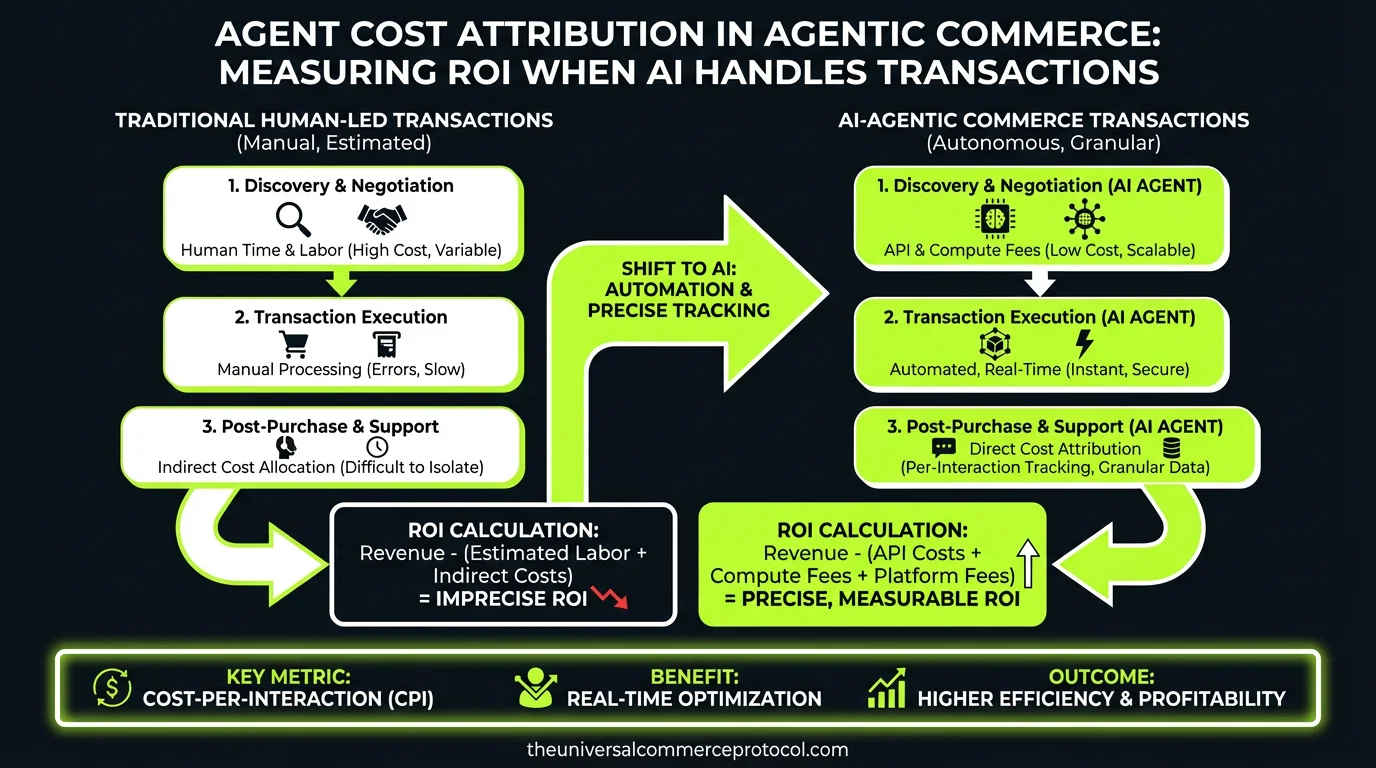
AI Agent Cost Attribution: Measuring ROI in Commerce
Agentic commerce platforms implement multi-dimensional cost attribution using real-time transaction telemetry to allocate LLM inference costs, GPU compute resources, and API licensing fees across web, mobile, and marketplace channels. Merchants measure AI agent ROI via cost-per-transaction (CPT), cost-per-conversion (CPC), and customer lifetime value (LTV) benchmarks, with attribution engines decomposing costs across LLM systems, computer vision…
-
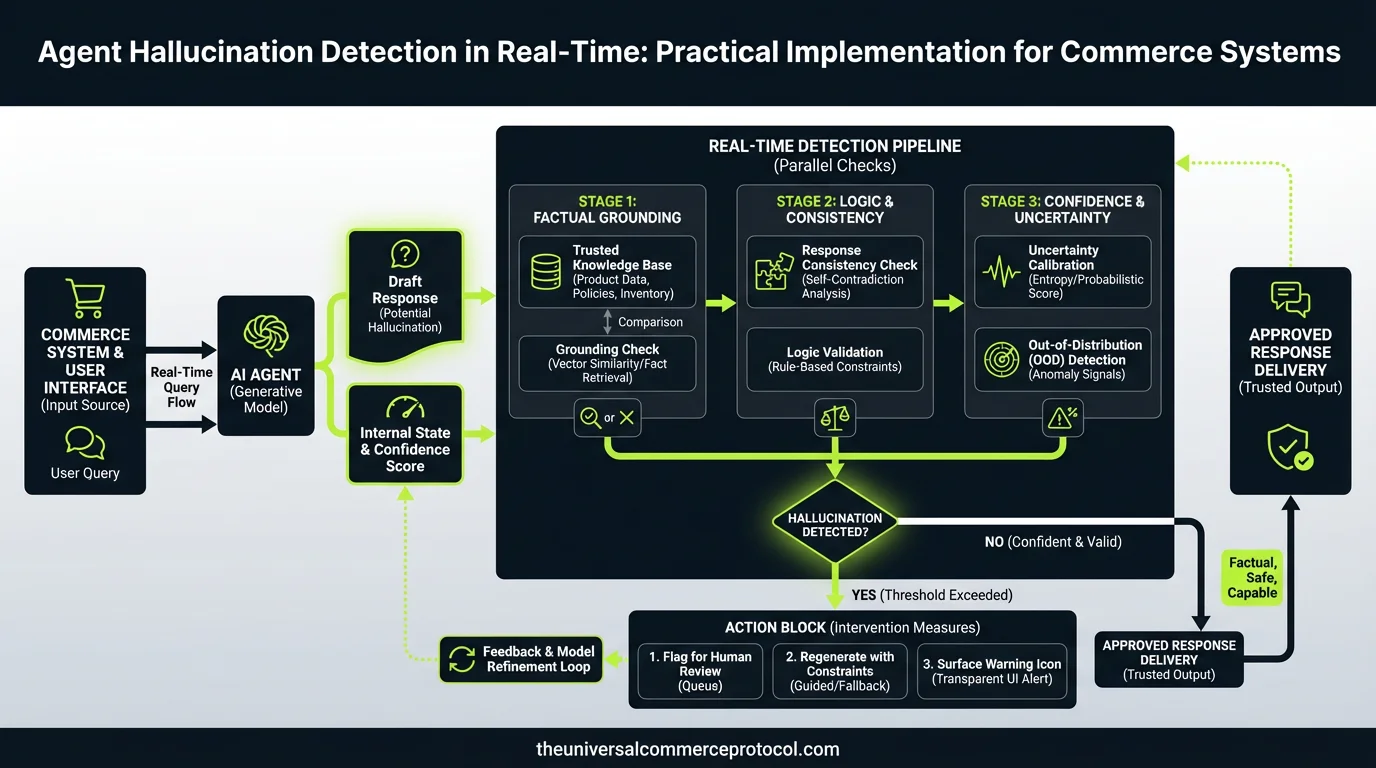
Real-Time Agent Hallucination Detection in Commerce
Real-time hallucination detection in e-commerce leverages Large Language Model (LLM) monitoring with Retrieval-Augmented Generation (RAG) verification, semantic consistency validation, and prompt engineering techniques to identify fabricated product claims across Shopify, WooCommerce, and REST APIs before publication. This detection framework mitigates Federal Trade Commission (FTC) violations, reduces chargeback disputes, and preserves data integrity across Product Information…
-
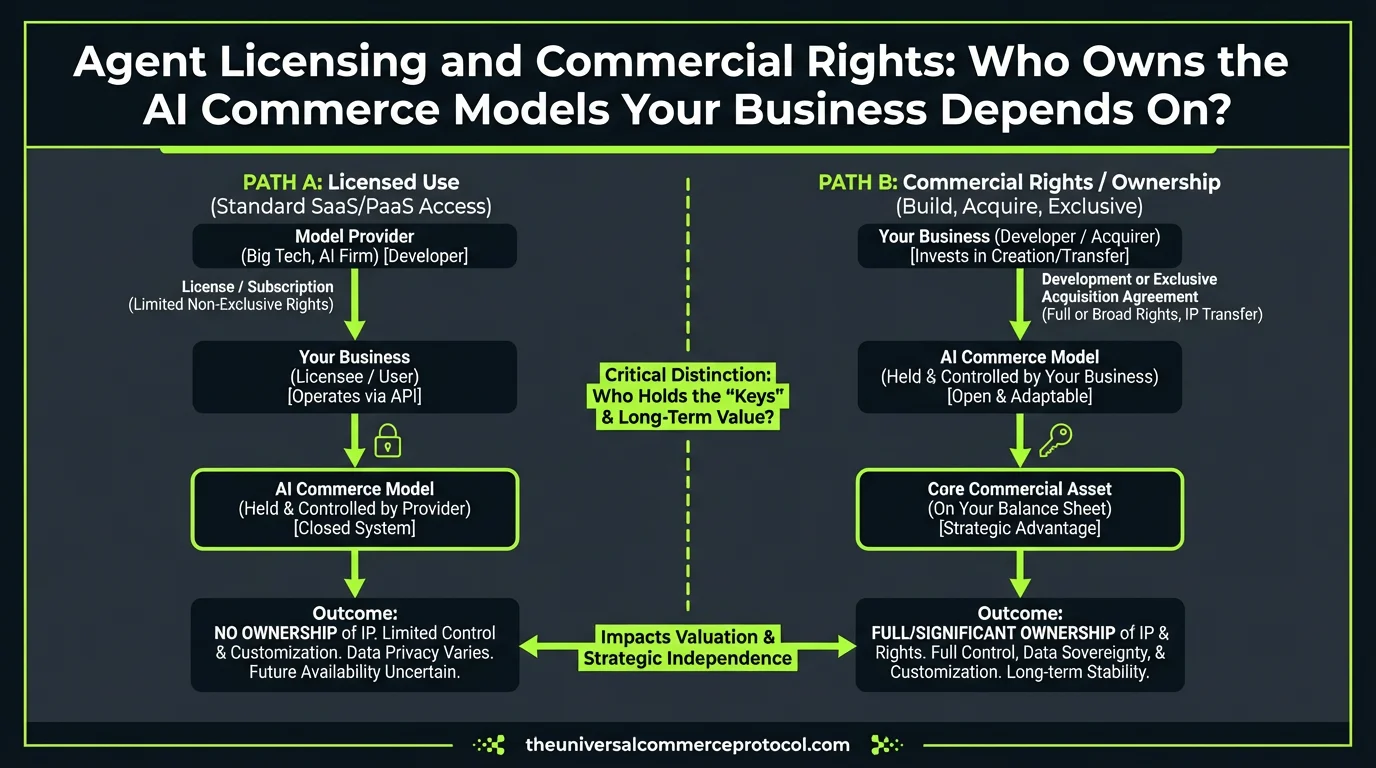
AI Commerce Licensing: Who Owns Your Agent Rights?
OpenAI’s API Terms of Service (Section 2.3), Anthropic’s Commercial License Agreement, and Meta’s Open Source License (OSSLv1.1) establish distinct permission boundaries governed by EU AI Act Articles 5-7, FTC Guidelines on AI Disclosure (2023), and NIST AI Risk Management Framework (SP 800-239). E-commerce merchants deploying GPT-4 Turbo, Claude 3 Opus, or Llama 2 commerce agents…
-
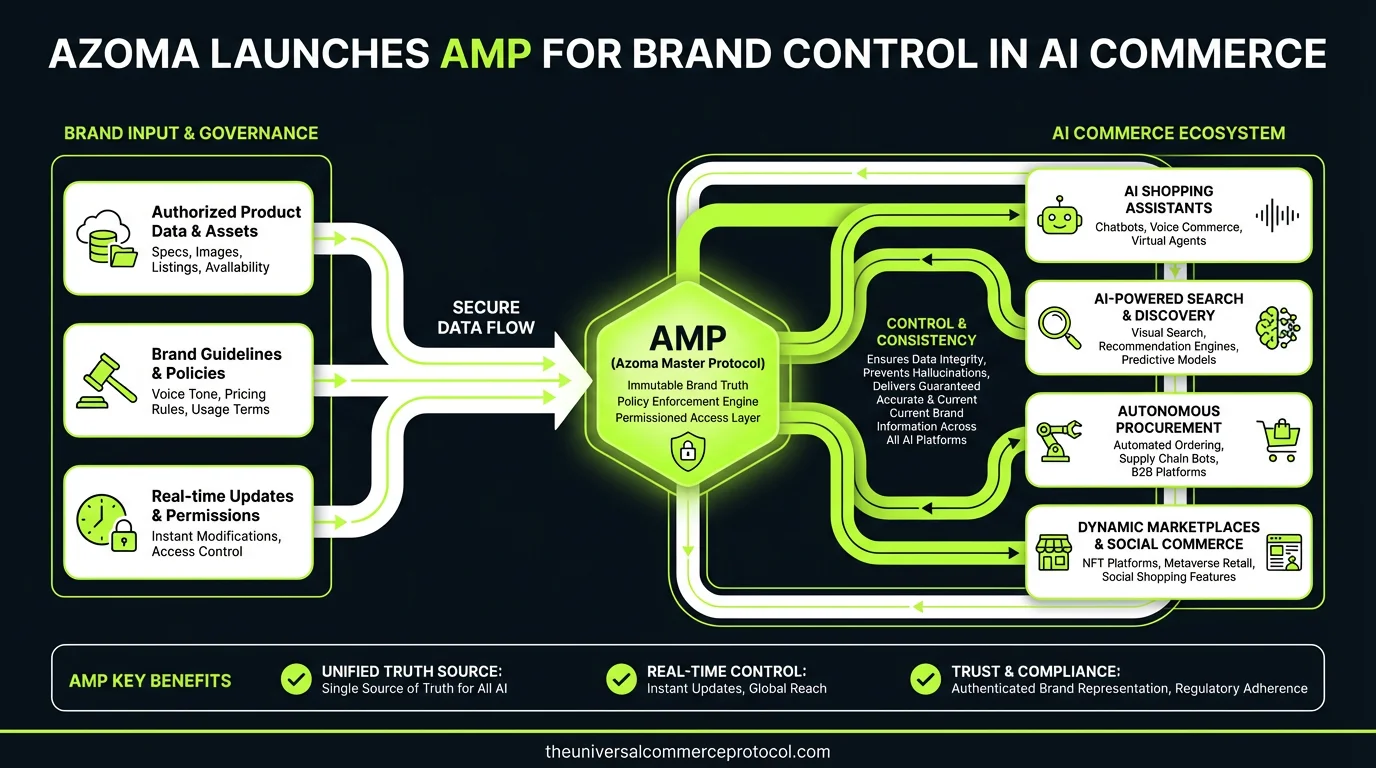
Azoma Launches AMP for Brand Control in AI Commerce
Azoma’s Agentic Merchant Protocol (AMP) is an open standard framework enabling retailers to maintain authoritative control over product catalogs, pricing, and merchandising rules across AI-powered shopping agents through machine-readable specifications and standardized APIs, with real-time inventory synchronization and transaction authorization against merchant-owned data sources. AMP establishes vendor-agnostic technical specifications for autonomous agent query validation and…