**What UCP Means for the Franchise Model**
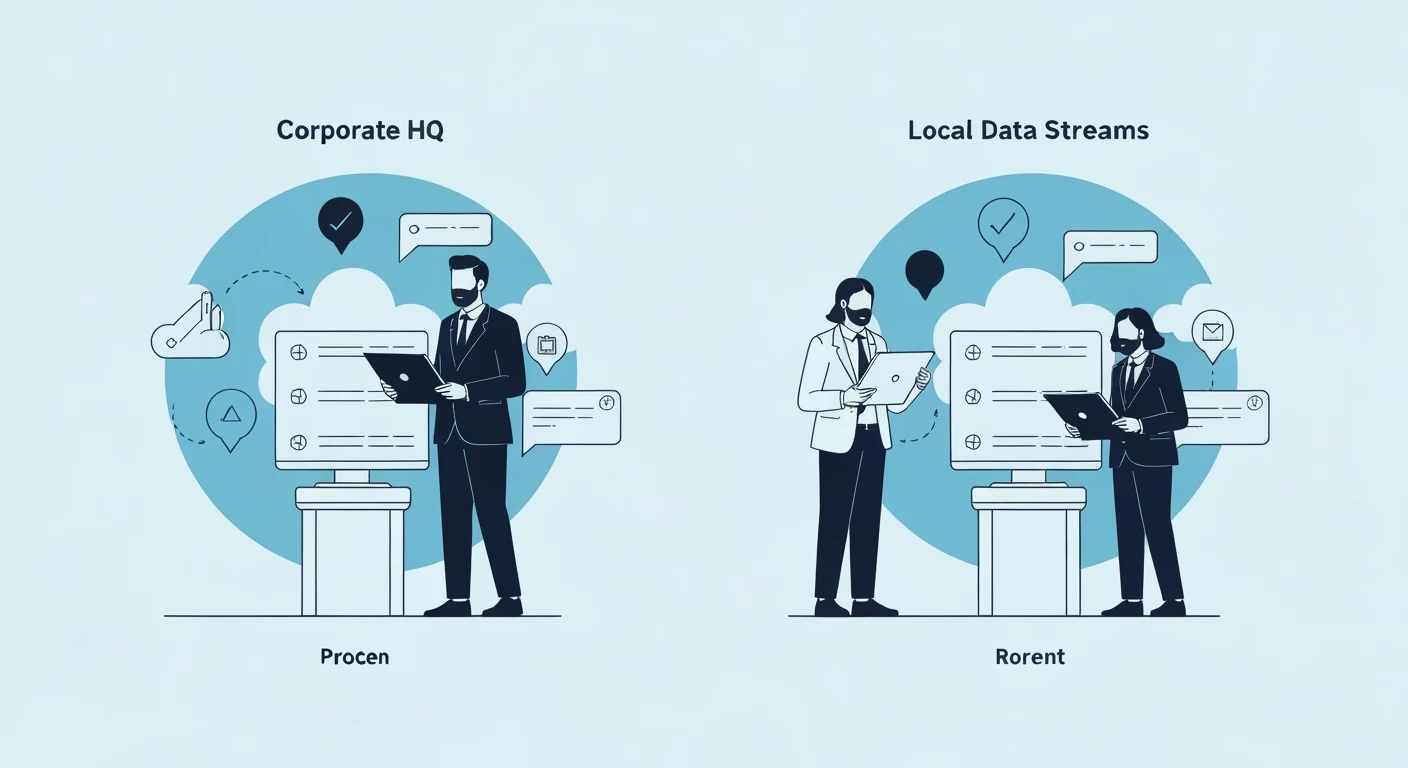
The regional manager just got the call. Corporate rolled out the new Universal Commerce Protocol mandate last quarter. Every location must publish real-time pricing, availability, and service specs through the UCP manifest. Clean. Standardized. No more spreadsheet chaos.
Except the franchisee in Phoenix is still running his own price sheet. He undercut corporate by 18% on water damage jobs because that’s what it takes to win bids in his market. His UCP node is live, technically compliant, but the data doesn’t match what headquarters published. Now an AI agent shopping for a restoration partner just hit both records and the manifest threw a conflict flag.
Welcome to the franchise war nobody’s talking about.
The Collision Nobody Modeled For
Franchise systems have always lived in this gray zone. Corporate sells the brand, the process, the national accounts. The franchisee owns the P&L, the trucks, the local relationships, and most importantly — the actual pricing power.
UCP doesn’t care about that history. It’s a machine-readable protocol that assumes truth is singular. When the AI agent queries “water damage restoration Phoenix metro, 48-hour response, licensed, insured,” it doesn’t want two answers. It wants the authoritative one.
Corporate wants their approved rate card to be the authoritative record. The franchisee wants to stay alive in a market where GEICO is squeezing every vendor to the bone. Both are publishing to the same protocol. Both think they’re right.
What Happens When the Agent Picks
I’ve been watching this play out in private beta groups. The AI doesn’t get confused — it gets decisive. It ranks based on whatever parameters the buyer set. Sometimes that favors corporate consistency. Sometimes it favors the local guy’s aggressive pricing.
Either way, someone loses.
The franchisee who undercuts the system gets the job but risks losing their franchise agreement. The corporate-compliant operator watches their closing ratio tank because their pricing looks inflated next to the rogue local node. The franchisor looks incompetent because their “standardized” network is broadcasting conflicting commercial data in public.
This isn’t theoretical. Restoration, plumbing, HVAC, pest control — any franchise vertical where local operators set their own rates is walking into this meat grinder. The ones with 60+ locations are already seeing it in their data feeds.
The Ugly Choices Coming
Corporate has three moves and none of them are clean.
They can enforce strict UCP compliance and force every franchisee to publish the national rate card. Good luck with that conversation in Texas and Florida where the franchisees actually own the market.
They can let franchisees publish whatever they want and watch the brand fragment in real time as AI agents pick winners based on price instead of brand standards. The national account contracts that justify the entire franchise model start to erode.
Or they can build some kind of “approved local variance” layer on top of UCP. Except now you’ve turned a simple protocol into yet another compliance platform that needs its own governance, audit trails, and exception management. The very thing UCP was supposed to eliminate.
The smartest franchisors I’m watching aren’t waiting for the protocol to solve this. They’re rewriting their franchise agreements now — before the AI agents make the conflict obvious to everyone. They’re putting language around “master manifest authority” and “local pricing delegation limits.” They’re thinking about tiered UCP nodes: corporate as source of truth for national accounts, local nodes only visible for true local search.
Most won’t. Most will wait until an AI buyer starts routing jobs to the cheapest non-compliant node and then panic.
Will’s Take: The franchise model was built for a world where humans mediated the difference between corporate standards and local reality. UCP removes the human mediator. That’s the feature, not the bug. The systems that figure out how to encode both the brand promise and legitimate local variation into the same machine-readable format are going to eat everyone else’s lunch. The rest are about to watch their franchisees fight their own brand in public, with AI agents as the referee. This isn’t a tech problem. It’s a business model problem that finally has a protocol forcing it into the open.
Related: Configure /.well-known/ucp Discovery Endpoint for AI
Leave a Reply