Author: Will Tygart
-
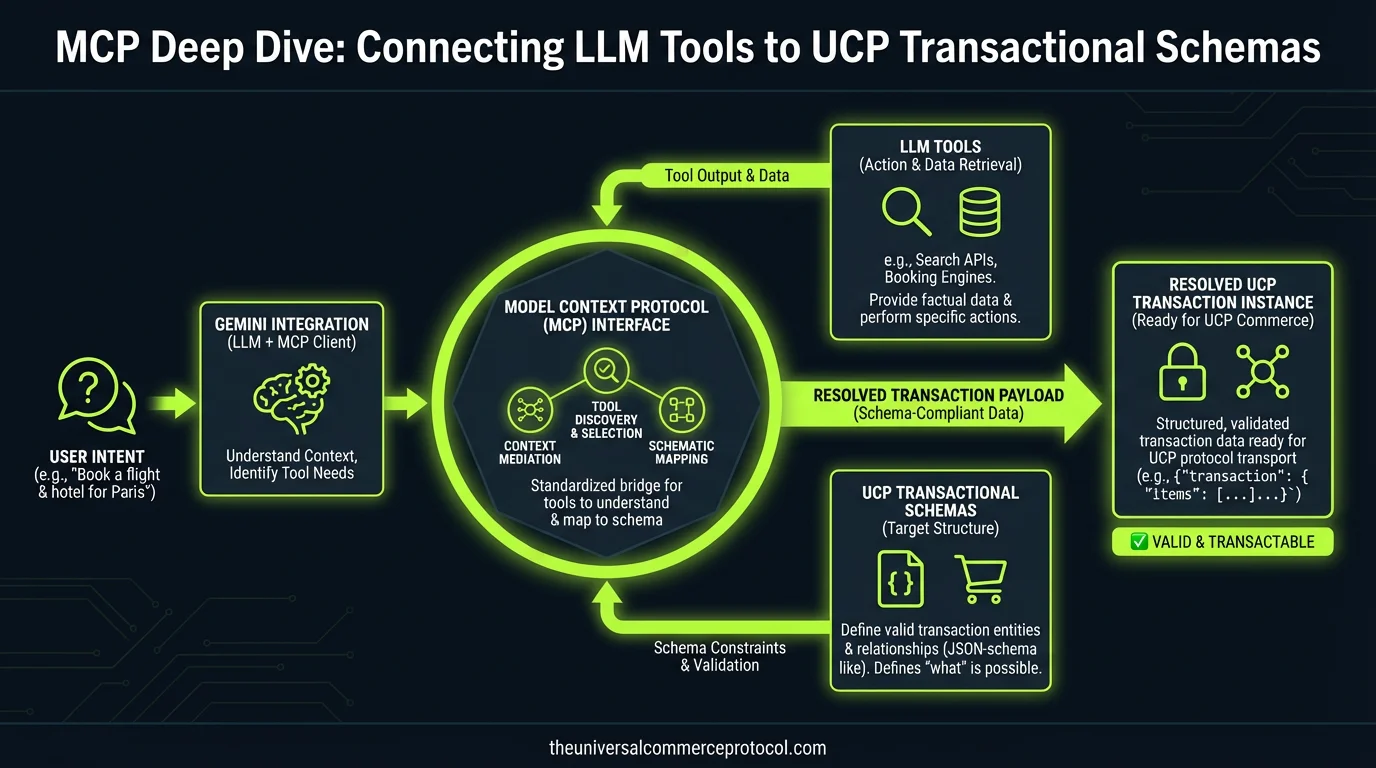
MCP Deep Dive: Connecting LLM Tools to UCP Schemas
Model Context Protocol (MCP) enables integration between Large Language Models—including Google Gemini, OpenAI GPT, and Claude—and Unified Commerce Platform (UCP) transactional systems by standardizing tool connections through schema-compliant APIs. This technical approach leverages MCP’s standardized transport layer to map LLM function calls to UCP transaction handlers, database schemas, and RESTful endpoints. Implementation requires defining JSON…
-
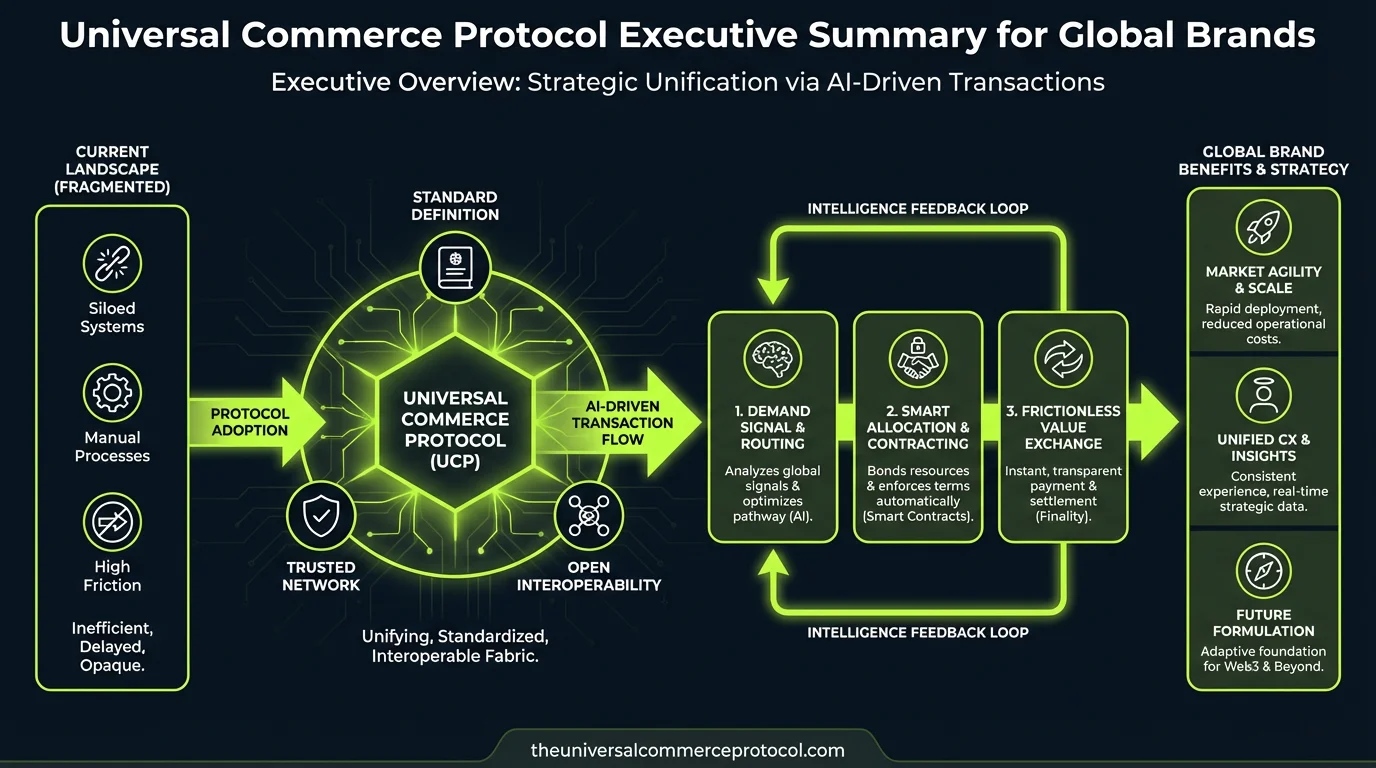
Universal Commerce Protocol: Executive Summary
The Universal Commerce Protocol (UCP) is a standardized framework that enables AI agents and language models to execute end-to-end e-commerce transactions—including product discovery, cart management, payment processing, and order fulfillment—across distributed retail systems without requiring graphical user interface interaction. Developed as an open standard for machine-to-merchant communication, UCP allows brands like Amazon, Shopify, and enterprise…
-
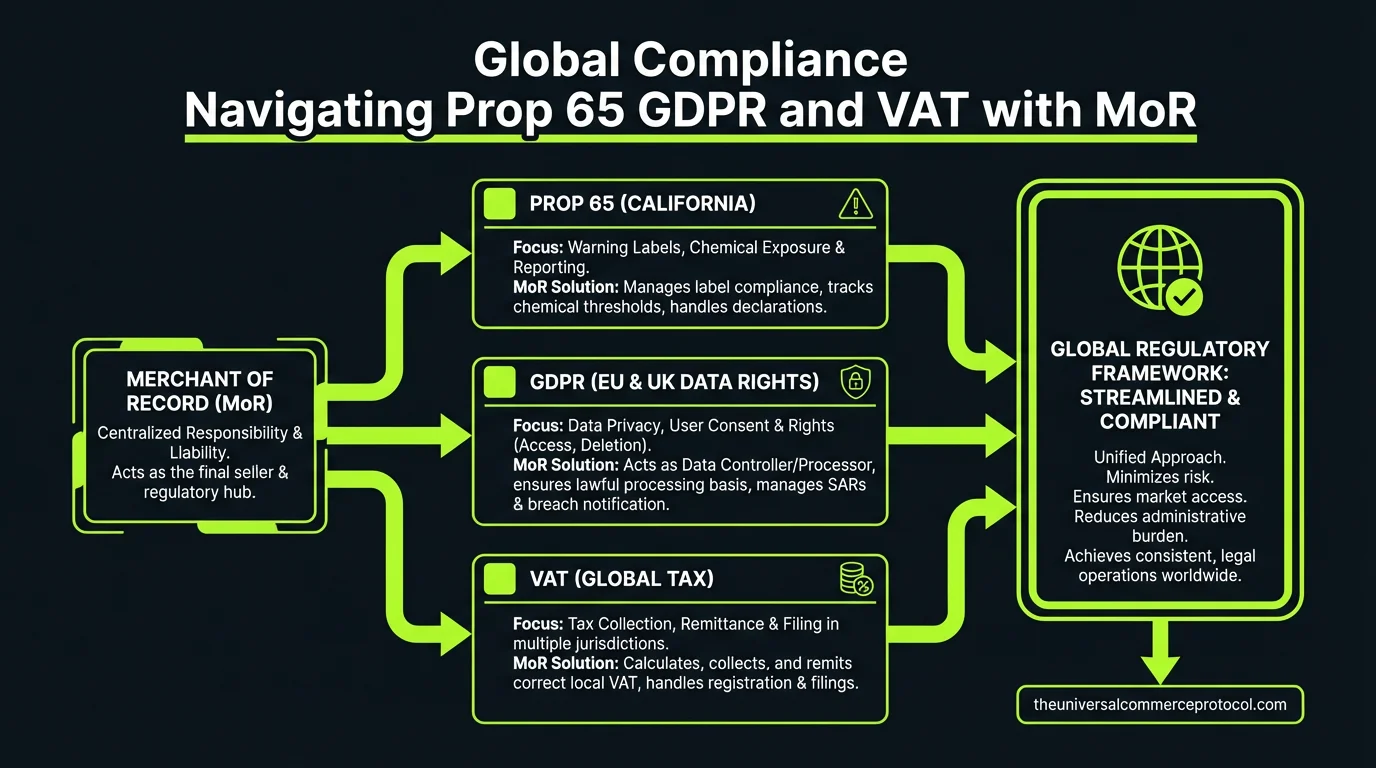
AI Commerce Liability: How Merchant of Record Ensures Compliance
The Merchant of Record (MoR) model within Unified Commerce Platform (UCP) architecture assumes legal responsibility for California Proposition 65 (Safe Drinking Water and Toxic Enforcement Act of 1986) compliance, including product warning requirements and chemical disclosure obligations, while simultaneously managing General Data Protection Regulation (GDPR) requirements under EU Regulation 2016/679 and VAT compliance across EU…
-
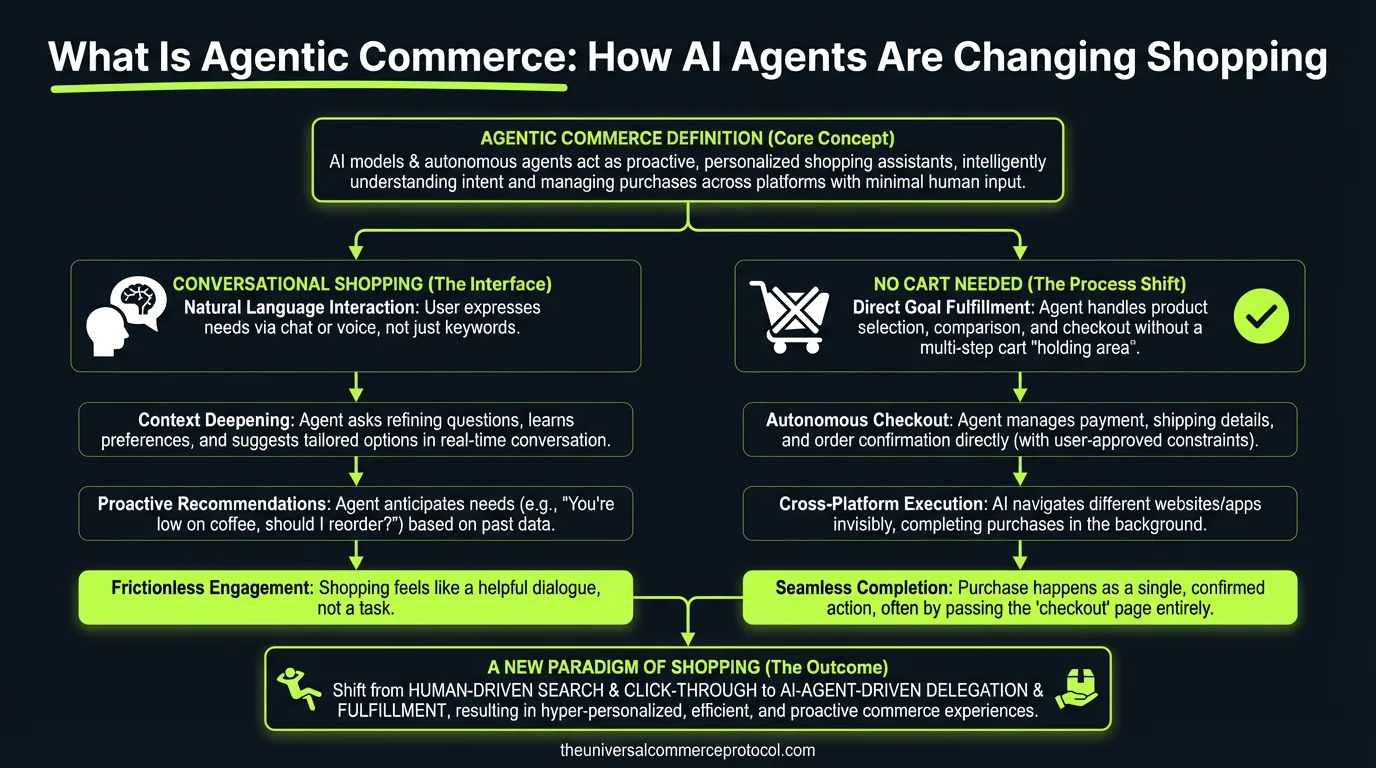
What Is Agentic Commerce? How AI Agents Are Replacing the Shopping Cart
Agentic commerce lets AI agents browse, compare, and buy on your behalf — no cart required. Learn how it works, which platforms support it, and what merchants must do to stay compatible in 2026.
-
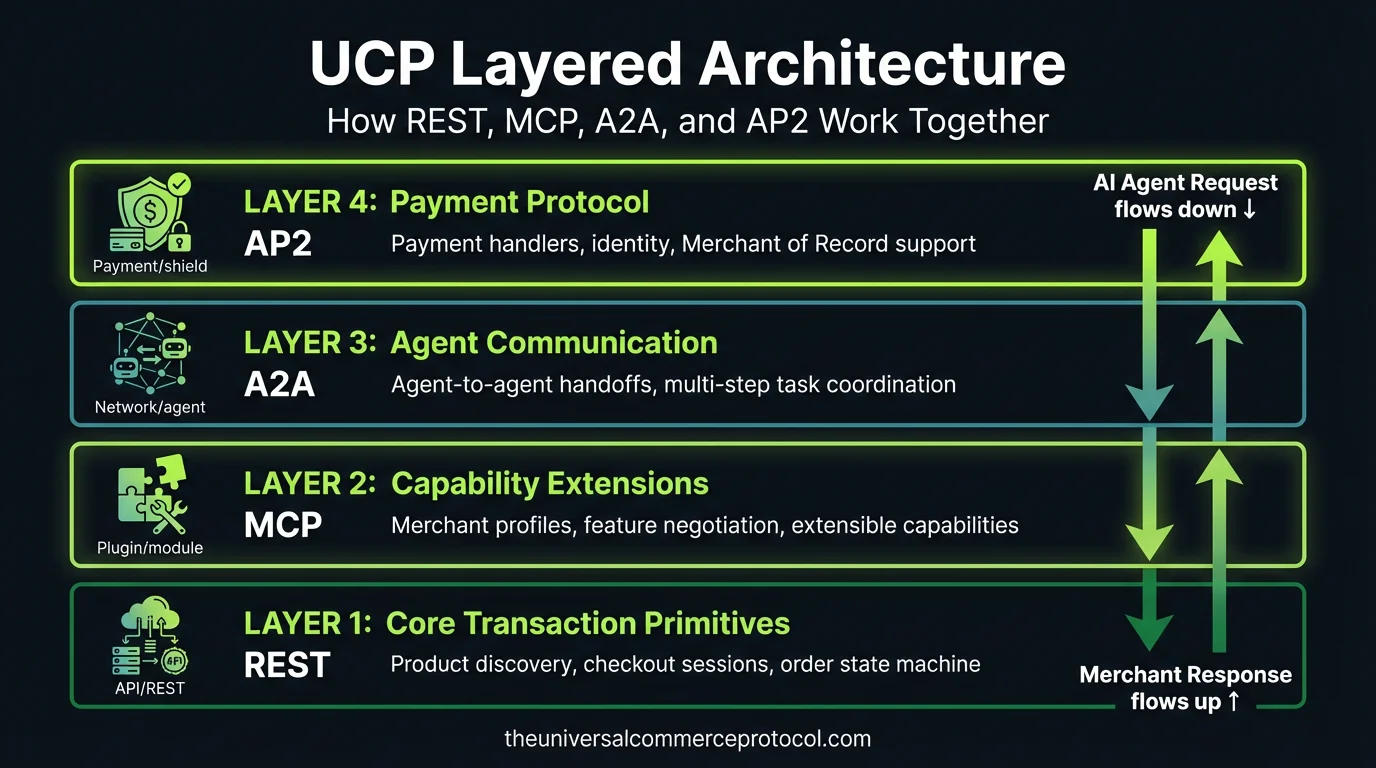
UCP’s Layered Architecture Explained: How REST, MCP, A2A, and AP2 Work Together
UCP’s layered architecture separates core transaction primitives from capabilities, extensions, and payment handlers — enabling the protocol to scale across millions of merchants and evolve without breaking existing integrations. This guide explains each layer, how merchant profiles and capability negotiation work, what the checkout state machine does, and how REST, MCP, A2A, and AP2 connect…
-
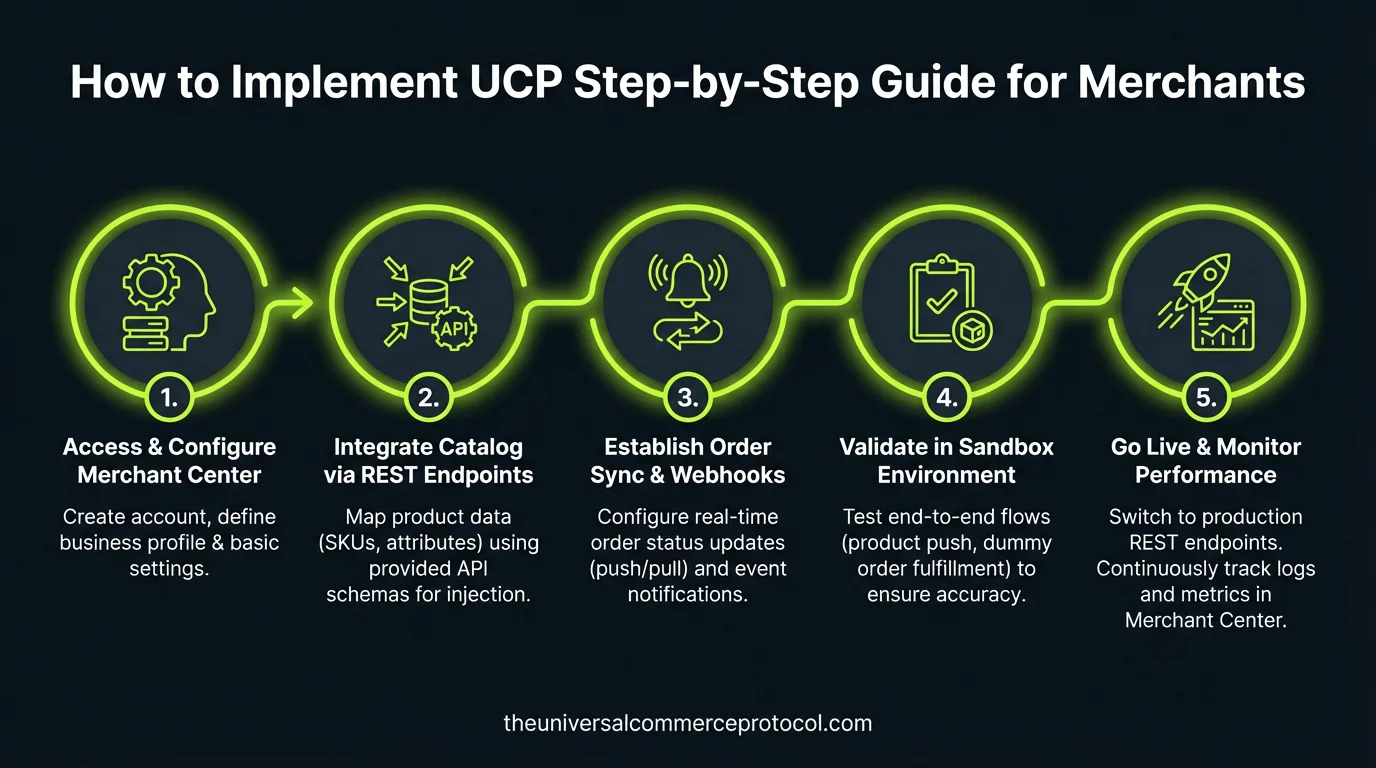
How to Implement the Universal Commerce Protocol: A Step-by-Step Guide for Merchants
Implementing UCP with Google means enabling checkout inside AI Mode and Gemini through five official steps: Merchant Center preparation, business profile publishing, three core REST checkout endpoints, user identification path selection, and order status sync. This guide covers every step sourced directly from Google’s official UCP implementation documentation, including what UCP does not require of…
-

How UCP Powers Checkout Inside Google AI Mode and Gemini for Merchants
Google has built the first live implementation of UCP to power checkout inside AI Mode in Search and the Gemini app. This guide covers how the Buy button appears, how Business Agent works, what Direct Offers are, and what Merchant Center data merchants need configured — verified entirely from official Google sources.
-
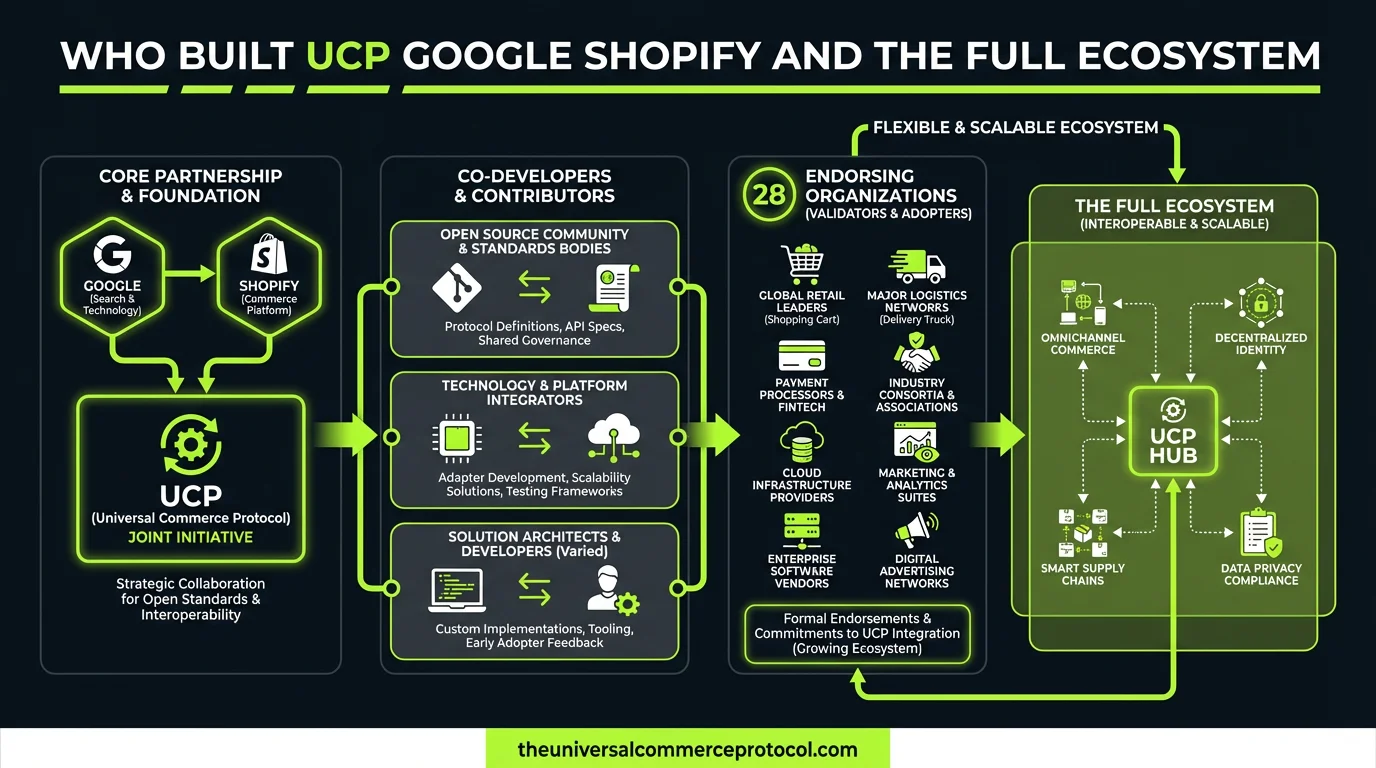
Who Built UCP? Google, Shopify, and the Full Ecosystem
UCP was co-developed by Google and Shopify, with Etsy, Wayfair, Target, and Walmart as additional co-developers, and endorsed by 28 additional organizations at launch. This article covers every confirmed partner, what role each plays, and what their involvement means for the protocol’s breadth and credibility — verified entirely from official primary sources.
-
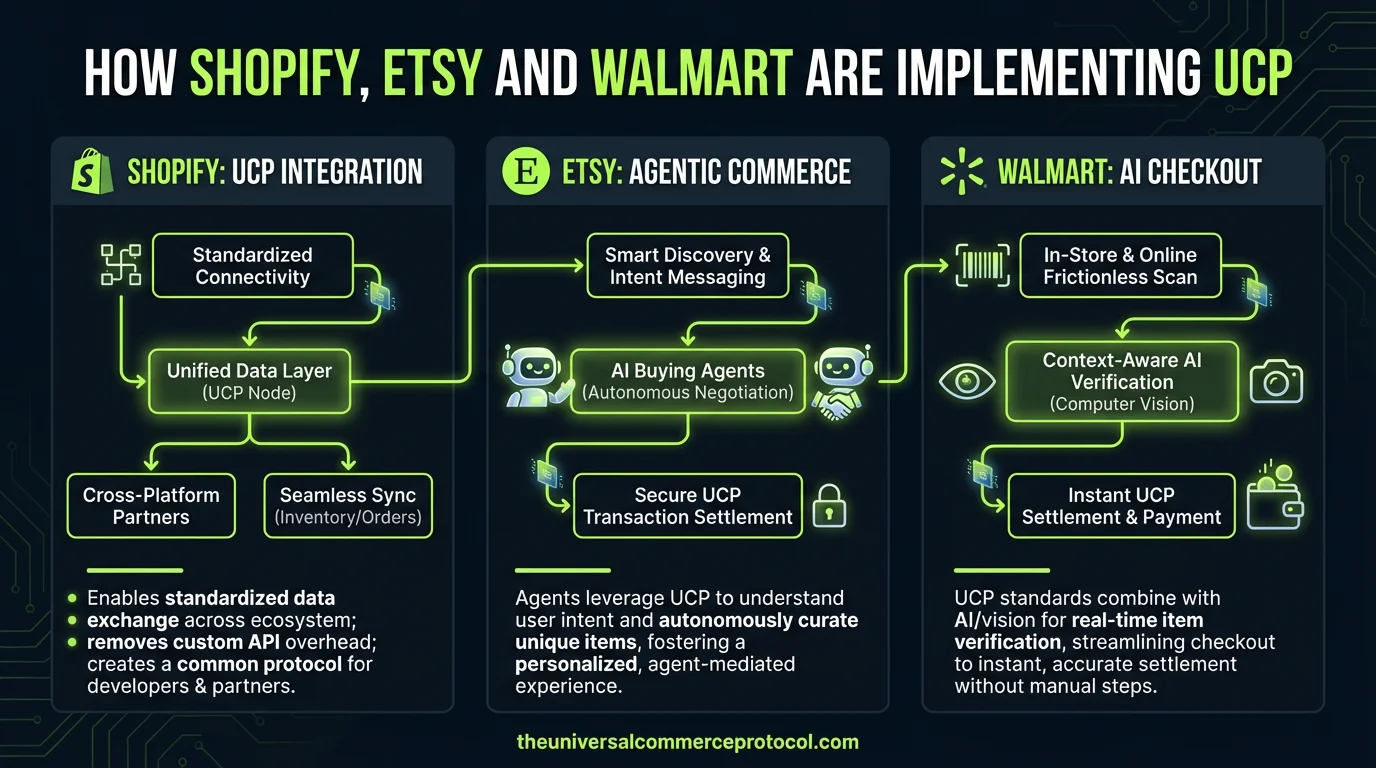
How Shopify, Etsy & Walmart Are Implementing UCP: An Ecosystem Overview
Detailed analysis of how Shopify, Etsy, Wayfair, Target, and Walmart are adopting the Universal Commerce Protocol — from co-development roles to live checkout implementations in AI Mode and Gemini.
-
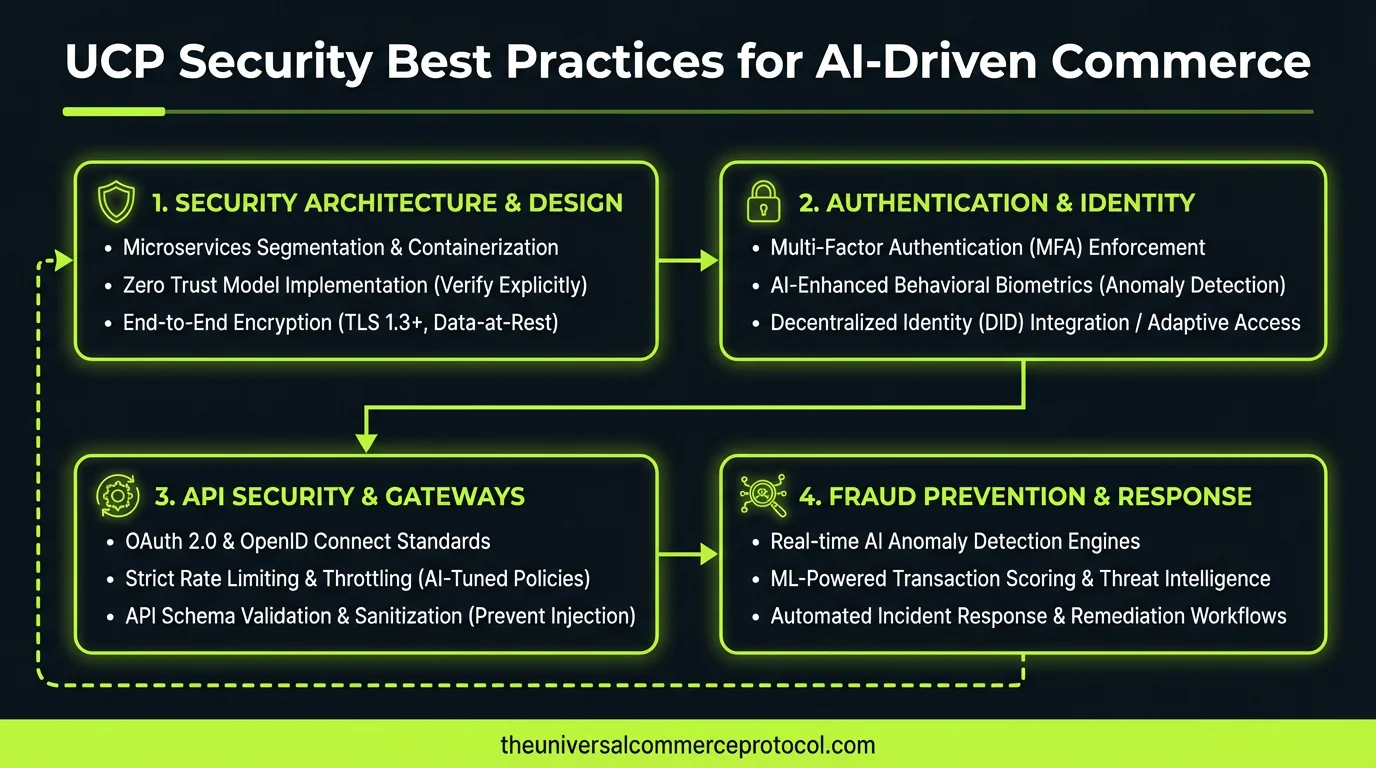
UCP Security Best Practices for AI-Driven Commerce (2026 Guide)
Secure your AI commerce stack with UCP. Covers agent authentication, verifiable intent, permission scopes, rate limiting, and compliance patterns for agentic transactions in 2026.