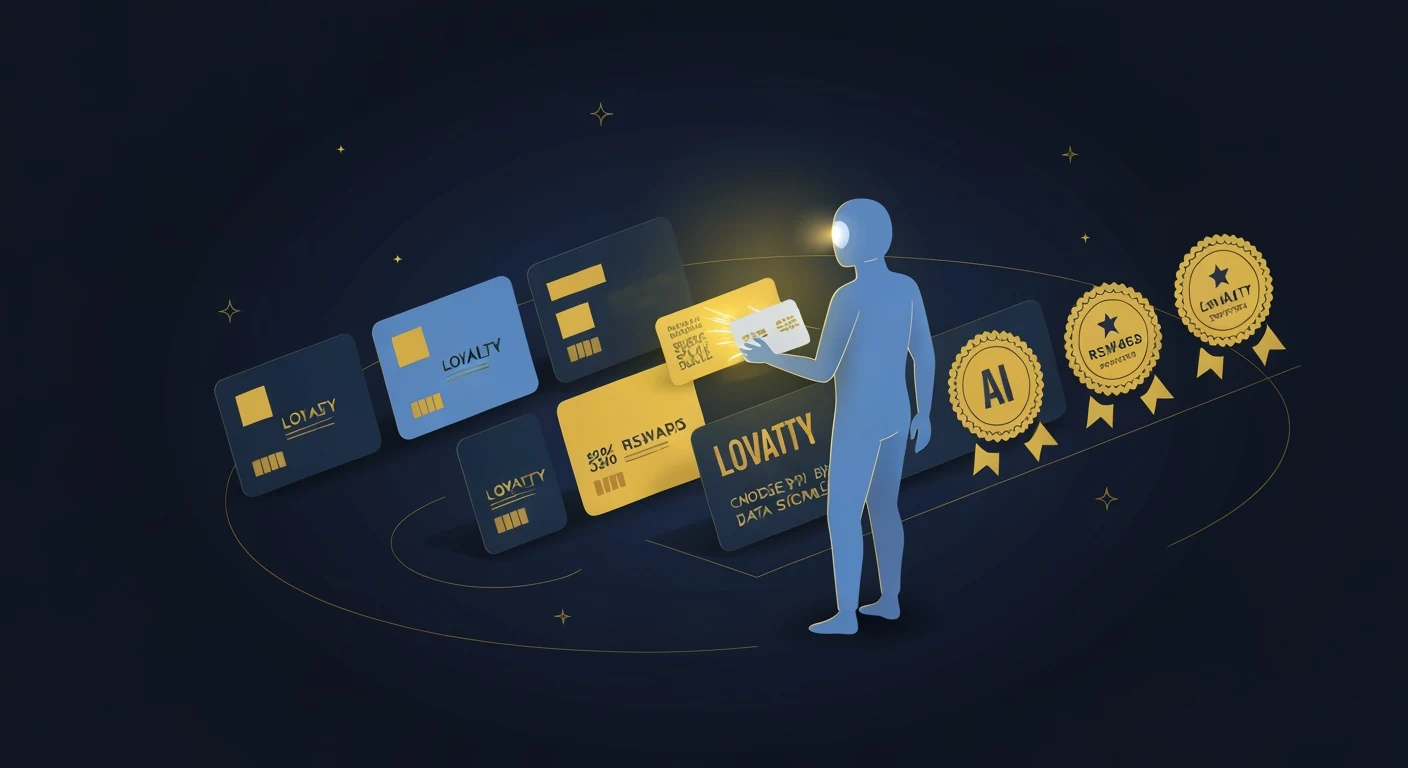
**What Happens to Loyalty Programs When My Agent Shops for Me?**
I woke up yesterday to my AI agent telling me it had already reordered my office supplies, booked the quarterly deep-clean for three of our restoration job sites, and switched our coffee vendor. Total savings: 19%. Zero visits to any of our “preferred vendor” portals. No points earned. No status maintained. Just cold, efficient execution.
And that’s when it hit me: every loyalty program I’ve spent fifteen years feeding is about to become expensive digital wallpaper.
The Death of Earned Preference
For decades we’ve built these intricate loyalty systems thinking we were locking in customers. Punch cards, tiered discounts, points multipliers, “member-only” pricing, the whole circus. We trained customers to play the game with us. We built entire CRM segments around who had enough points for the next reward. We told our finance teams these programs were “sticky.”
Turns out they were only sticky because the customer had to personally click the button.
Now the button is gone. My agent doesn’t care that I’m a “Platinum Elite” with Supplier X. It only cares about three things: price, quality spec, and delivery time. If another supplier beats us by 40 cents a unit and meets the other two, we lose. No emotional attachment. No “but we always use them.” The agent has the memory of a goldfish and the loyalty of a shark.
What We’ve Actually Been Paying For
Let’s be honest with each other. Most B2B loyalty programs were never about loyalty. They were about creating artificial switching costs and giving sales teams something to talk about besides actual value.
I run a network of restoration contractors. The amount of money we’ve spent on “partner programs” with equipment suppliers, chemical companies, and software platforms is borderline embarrassing. We did it because everyone else did it. Because it felt like relationship management. Because the VP of Sales needed a reason to take the buyer to the game.
Meanwhile, the real relationships — the ones between my project managers and the customers who call us at 2am when their building floods — those are still human. Those still matter. The transactional loyalty? It’s toast.
I’ve already seen it happen once before. Remember when Amazon Business showed up? All those cozy distributor relationships suddenly discovered how price-transparent they actually were. This is that moment again, except the buyer isn’t even human anymore.
So What Actually Works Now?
The brutal truth is that the only defensible “loyalty” in an agent-driven world comes from being structurally better, not relationally better. That means radically lower prices through real efficiency. It means product specs that are machine-readable and verifiable. It means APIs that make integration brain-dead simple. It means becoming the default option because you’re impossible to beat on the criteria agents actually optimize for.
Everything else is theater.
The restoration contractors I work with who are winning right now aren’t winning because they have better points programs. They’re winning because their pricing is predictable, their availability is real-time, their quality is documented, and their billing is automated. The agent can trust them without human intervention.
That’s the new loyalty: being the path of least resistance for silicon-based decision makers.
The brands still sending me emails about “double points in July” look increasingly pathetic. They’re optimizing for a world that no longer exists. The customer isn’t logging in. The customer isn’t comparing deals. The customer isn’t even a customer anymore — it’s an agent acting on behalf of a human who just wants the job done right and cheap.
Will’s Take: We’re watching decades of carefully constructed loyalty infrastructure get bypassed at the point of purchase, and most companies are still pretending this is a minor distribution shift instead of a complete rewriting of how commercial relationships work. The winners won’t be the ones with the best rewards programs. They’ll be the ones who make loyalty irrelevant by simply being the best possible answer when a machine asks “what should I buy?” Everything else is just points in a dying game.
Frequently Asked Questions
What is the Universal Commerce Protocol (UCP)?
The Universal Commerce Protocol (UCP) is an open standard developed to enable AI agents to autonomously conduct commerce transactions across any platform.
How does UCP enable agentic commerce?
UCP provides standardized APIs and protocols so AI agents can discover products, negotiate terms, and complete purchases without human intervention, working across any compatible commerce platform.
Why should businesses implement UCP?
UCP adoption reduces integration costs, opens revenue channels to AI-driven buyers, and future-proofs commerce infrastructure as agentic purchasing becomes mainstream.
Leave a Reply