Tag: Model Context Protocol
-
Claude Marketplace: Enterprise AI Economics Reimagined
Global enterprise AI spending reached $19.6 billion in 2024, with financial services accounting for 28% of total allocation across North America, Europe, and Asia-Pacific regions. Anthropic’s Claude Marketplace, launched in 2024, enables commission-free deployment of Claude AI models across Amazon Web Services (AWS), Google Cloud Platform (GCP), and Microsoft Azure, reducing vendor lock-in for enterprises…
-

Claude Marketplace & MCP: Anthropic’s Enterprise AI
Anthropic, founded in 2021 by Dario Amodei and Daniela Amodei and headquartered in San Francisco, California, launched Claude Marketplace—a commission-free integration platform supporting Claude 3.5 Sonnet and Claude 3 Opus models—with six inaugural partners including Salesforce Inc., Amazon Web Services (AWS), and Google Cloud. The platform implements Anthropic’s proprietary Model Context Protocol (MCP) standard to…
-

Claude Code leads; Google pushes gRPC for MCP
Anthropic’s Claude Code now most-used AI coding tool.
-

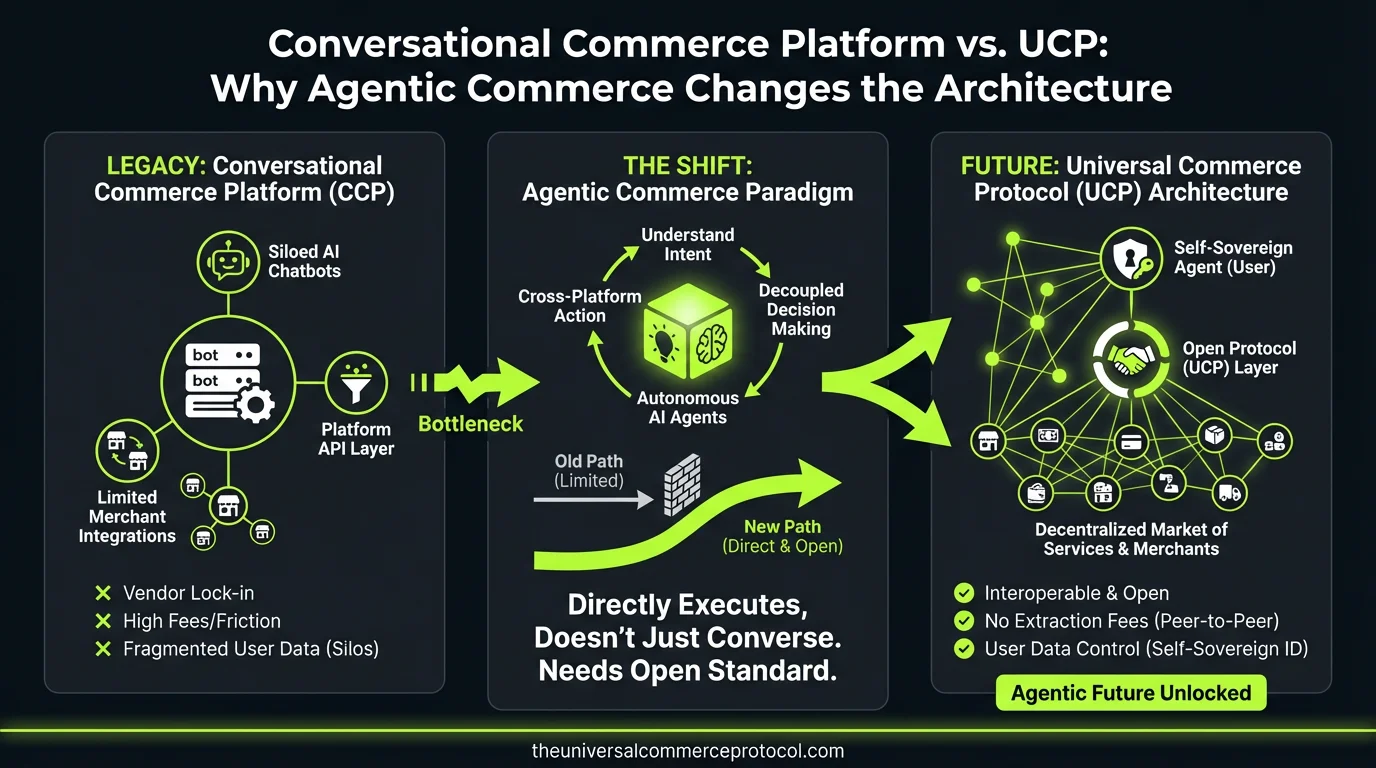
Conversational Commerce Platform vs. UCP: Why Agentic Commerce Changes the Architecture
Traditional conversational commerce platforms add a chatbot layer on top of checkout. UCP makes any AI surface — Gemini, ChatGPT, Alexa — a native commerce platform. Here’s what the architectural shift means for merchants.
-

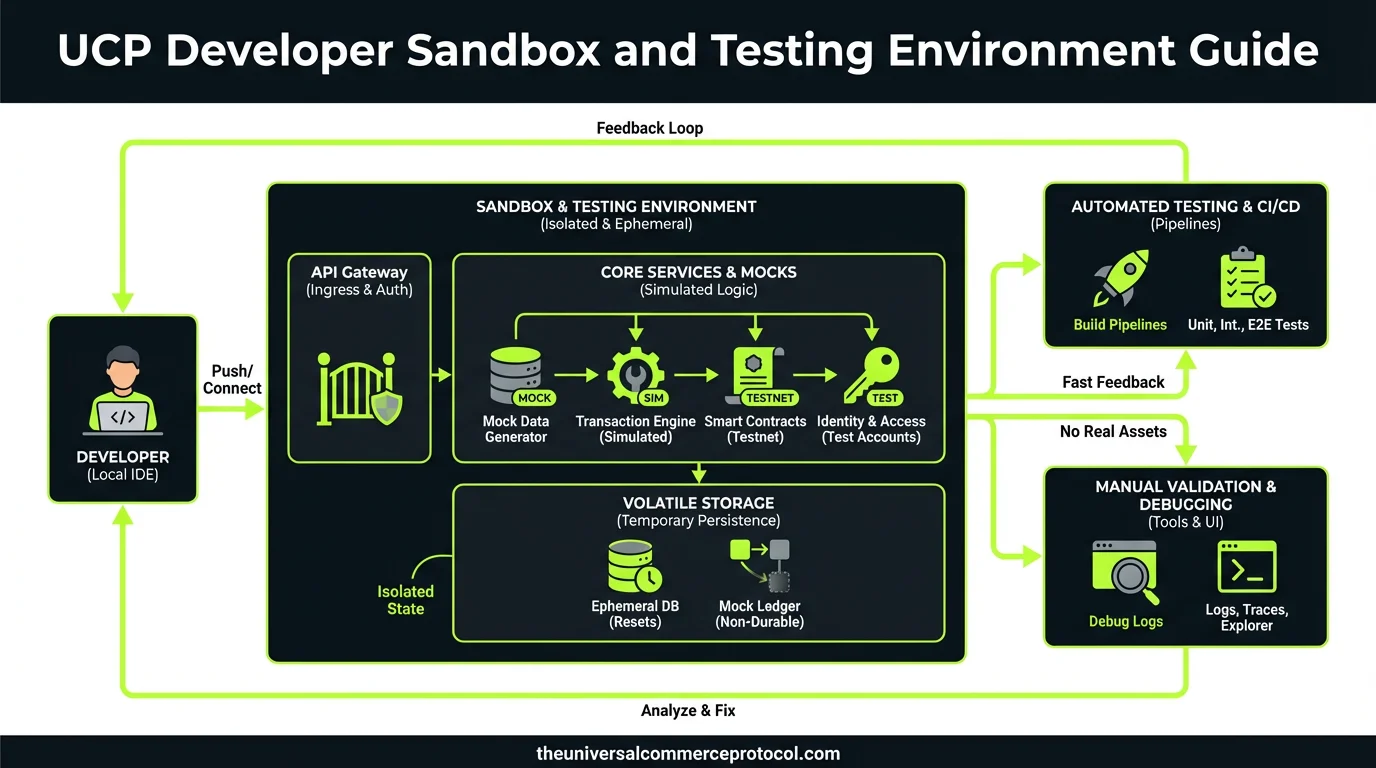
UCP Developer Sandbox & Testing Environment Guide
The Universal Commerce Protocol (UCP) Developer Sandbox, maintained by the UCP Technical Steering Committee, is a PCI DSS Level 1-certified pre-production environment that allows merchants to test REST and GraphQL API integrations against simulated payment processors including Stripe, PayPal, and Square. It supports complete order lifecycle testing—from transaction authorization and settlement reconciliation to webhook routing…
-

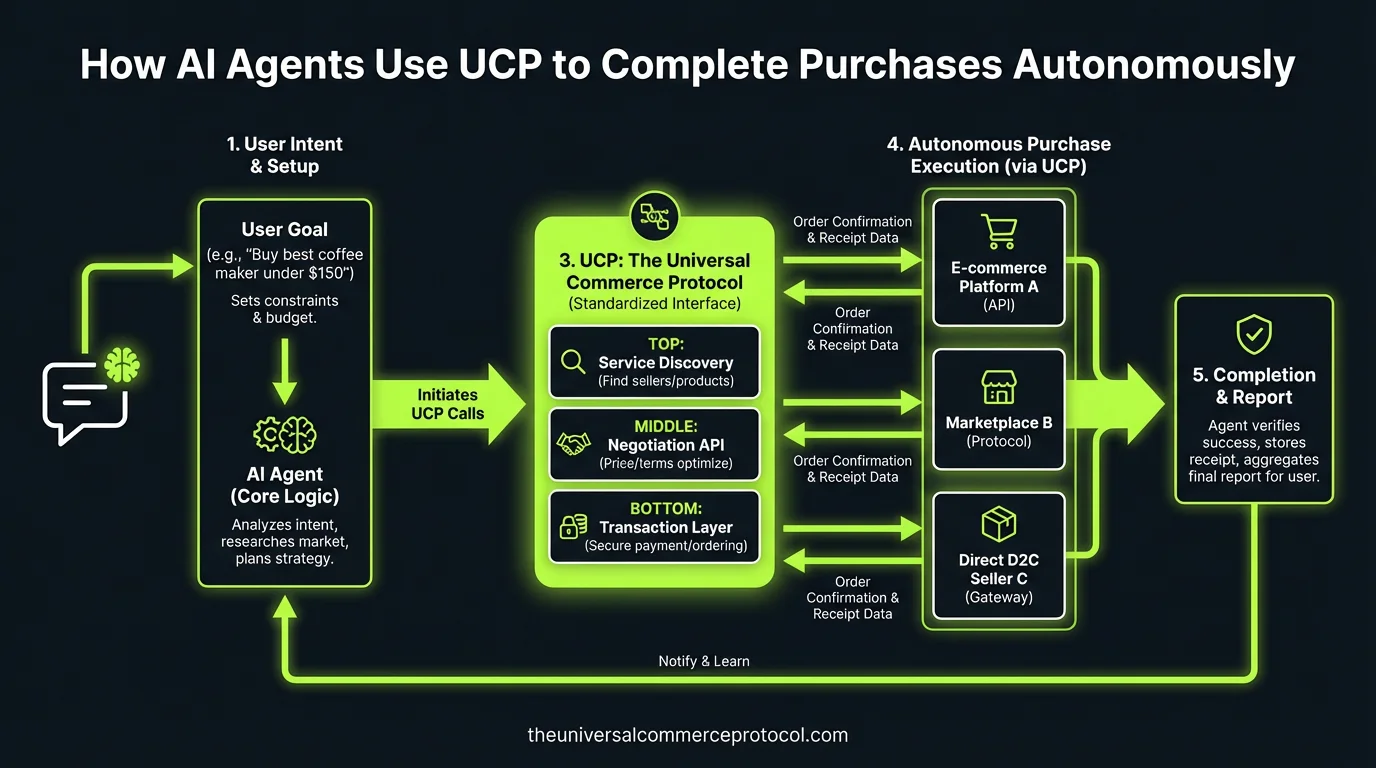
AI Agents & UCP: Autonomous Purchase Completion
The Universal Commerce Protocol (UCP) is an open standard that enables AI agents from OpenAI, Anthropic, and Anthropic-backed services to execute autonomous purchases across e-commerce platforms including Shopify, WooCommerce, and custom REST APIs using OAuth 2.0 authentication and large language model natural language processing. UCP integrations route transactions through PCI-DSS Level 1–certified payment processors Stripe,…
-

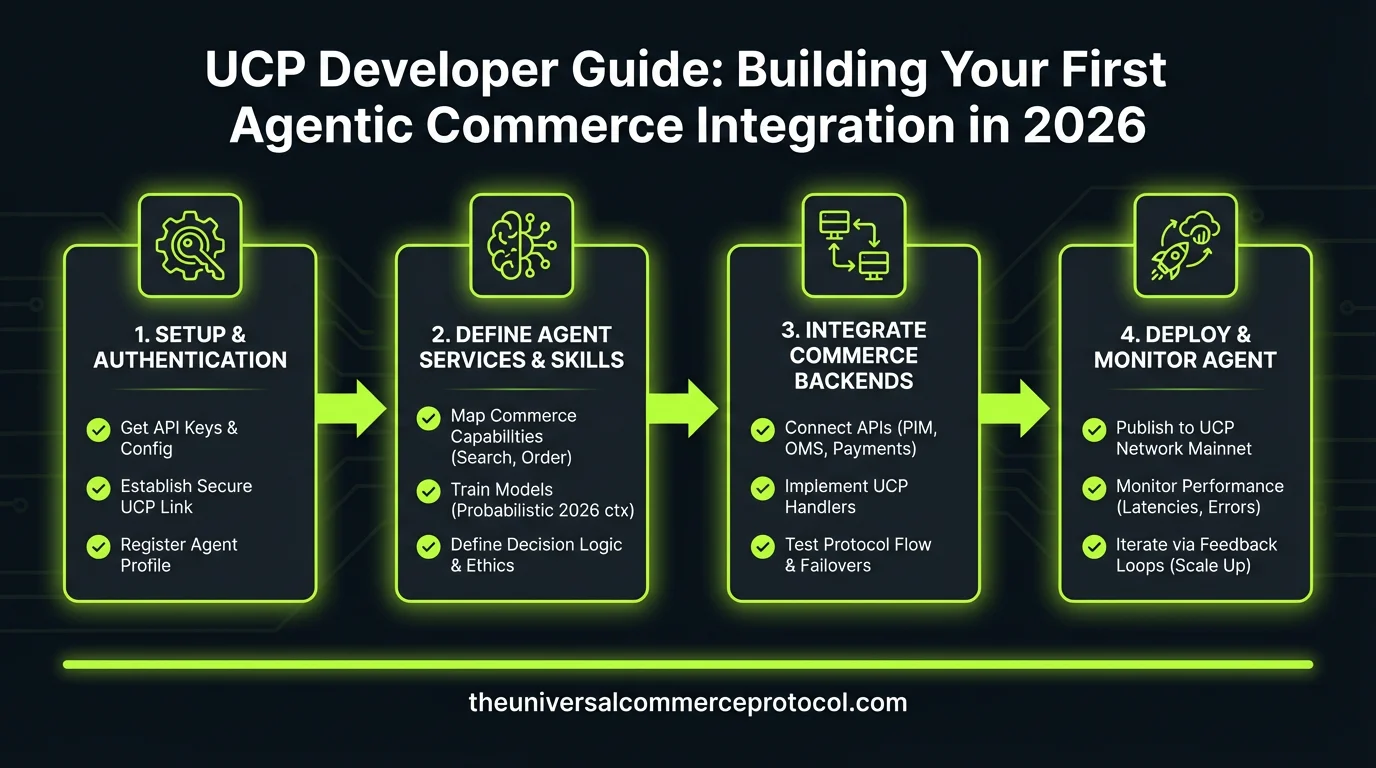
UCP Developer Guide: Building Agentic Commerce
The Universal Commerce Protocol (UCP) is a developer framework that enables autonomous transaction execution through the Agent Payments Protocol, incorporating OAuth 2.0 and API key authentication mechanisms with REST API endpoints for merchant system integration. This 2026 guide details UCP deployment on Ethereum, Polygon, and Solana networks, covering ISO 20022 payment message formatting, real-time payment…
-

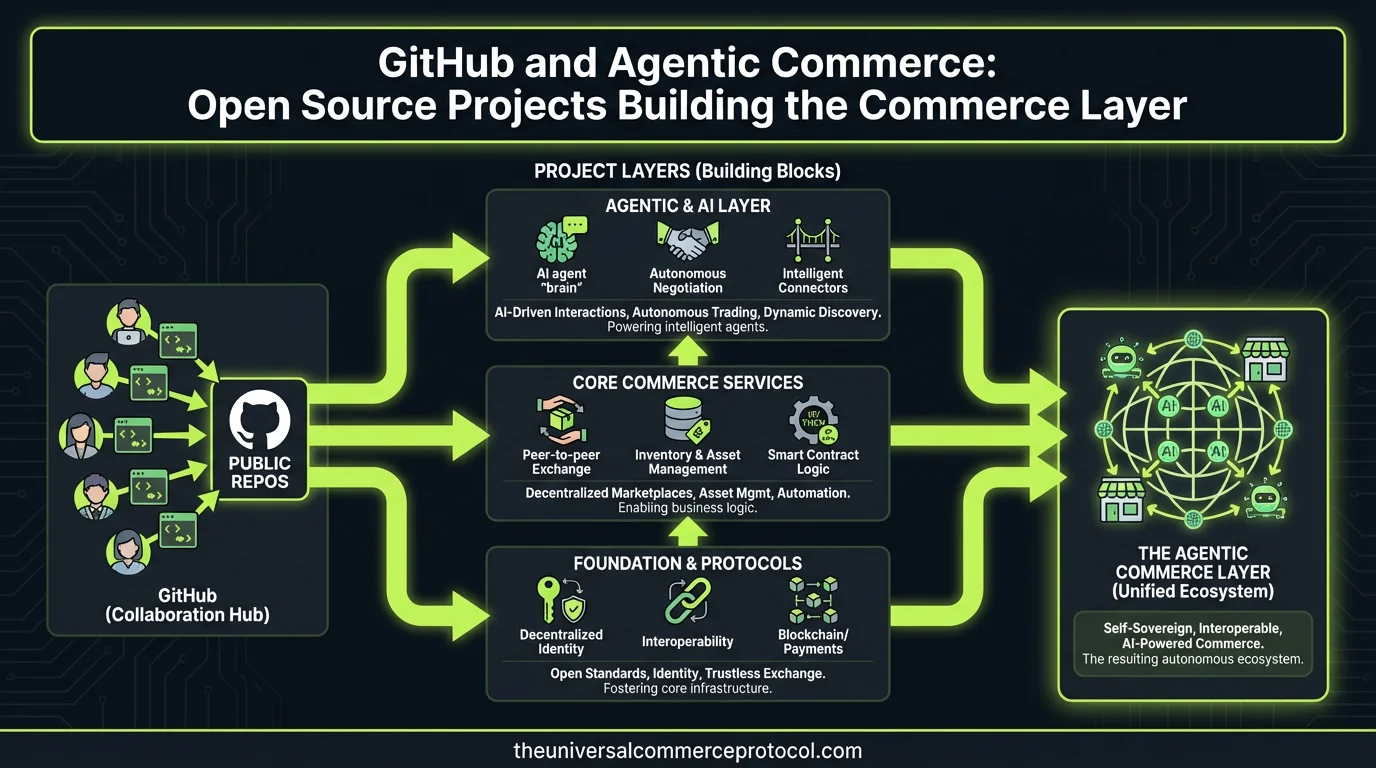
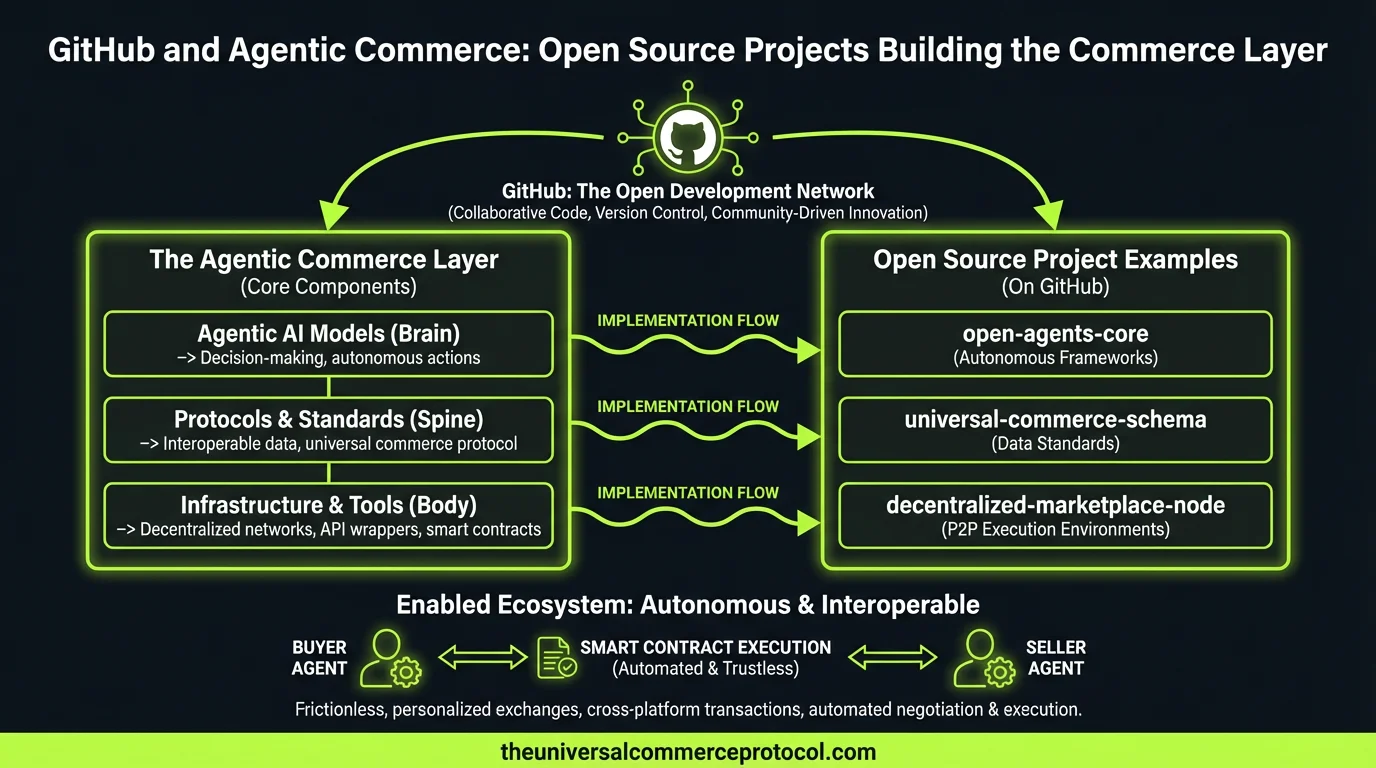
GitHub Open Source Projects Building Agentic Commerce
GitHub hosts foundational open source projects for agentic commerce, including Anthropic’s Claude Agent SDK, Stripe’s payment APIs, and the Open Payment Protocol (OPP), enabling autonomous AI agents to execute transactions through standardized OAuth 2.0 authentication, webhooks, and REST/GraphQL interfaces. Major contributors including Shopify, PayPal, and the Hyperledger Foundation are developing deterministic payment workflows with cryptographic…
-

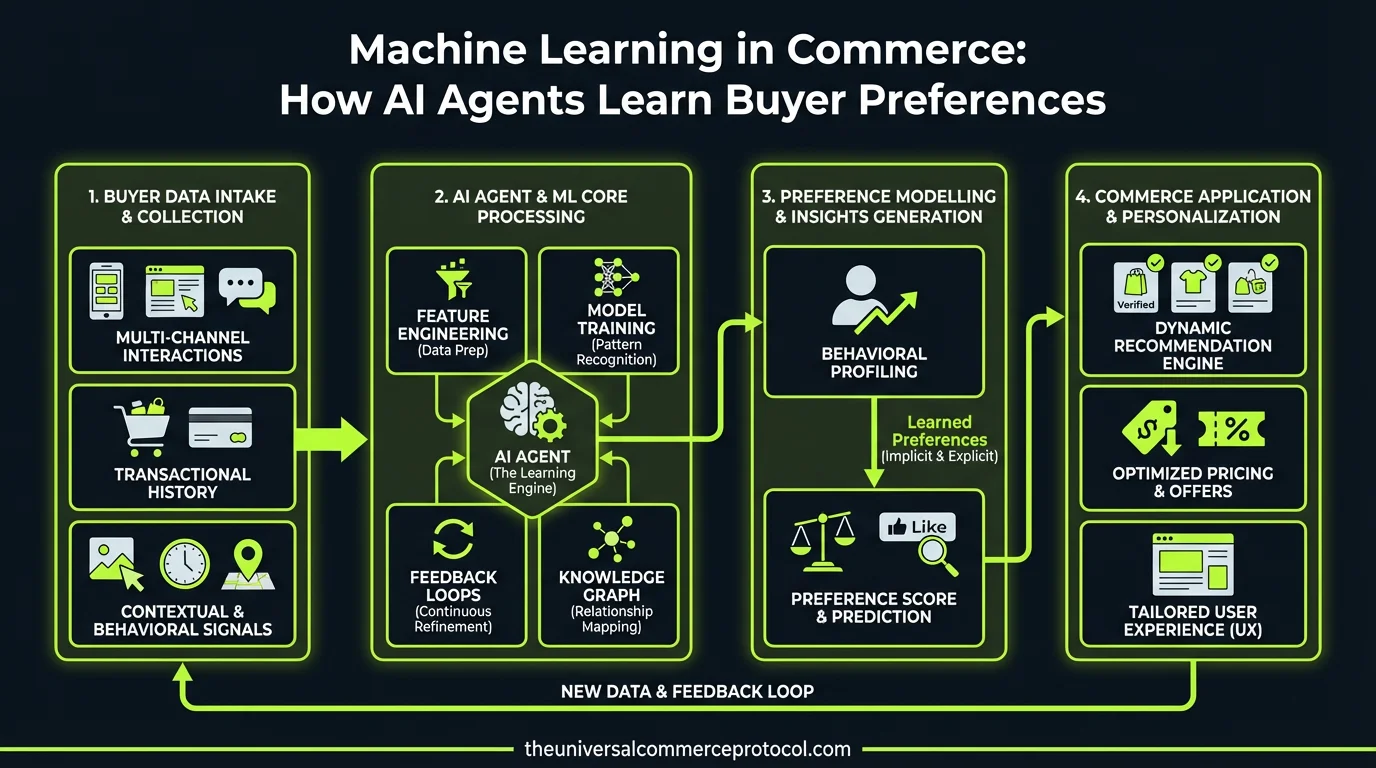
Machine Learning in Commerce: AI Agents Learn Preferences
AI shopping agents utilize supervised and reinforcement learning algorithms to analyze behavioral signals—including browsing history, purchase patterns, and explicit feedback—enabling real-time preference prediction in e-commerce environments. As of 2026, transformer-based preference models and collaborative filtering systems have become standard infrastructure for autonomous purchasing platforms, with companies like Amazon, Shopify, and enterprise retailers deploying these systems…
-

GitHub and Agentic Commerce: Open Source Projects Building the Commerce Layer
Explore the developer ecosystem building agentic commerce on GitHub, from agent payment protocols to open source frameworks enabling autonomous transactions. Discover how developers are constructing the foundational layer for machine-to-machine commerce.